


GY Wrangler AT Adventure Tire


Thread Starter
|
Rock Crawling
Joined: May 2023
Posts: 251
Likes: 95
From: USA
 GY Wrangler AT Adventure Tire
Noticed my new Defender has the GY Wrangler tires - but they don't say Kevlar on them. The tire is P rated, not LT. And the speed rating is H! Has anyone put the Kevlar version of the AT on as a replacement? When these factory installed tires go, I'd like to find a tire that is 3 peak rated for severe snow, and I'm open to buying replacement GY Wrangler Adventures again, but wouldn't I rather have the Kevlar version of the same AT Adventures?? Wondering if another Defender owner that initially had the ones without Kevlar was able to go to a tire shop later on and have them put on the Kevlar version when they needed replacement. Thanks.
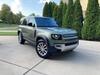
The Goodyear Adventures on the Defender are a JLR-specific tire. Goodyear makes them specifically for JLR in the three sizes: 255/70R18, 255/65R19 and 255/60R20. Since these are specific to the Defender, you will not find the Kevlar Adventures in the OEM sizes.
I had them on mine for two years and they're okay. I don't think they are as bad as everyone says, but they are not great. Snow performance was satisfactory, but off-road performance was very mediocre.
If you plan on doing any moderate off-roading, I would swap them out with something better, like a BFG KO3, Falken Wildpeak A/T or the GY Duratracs immediately. If you decide to keep them for a while, I promise you'll regret not swapping them out sooner.
I had them on mine for two years and they're okay. I don't think they are as bad as everyone says, but they are not great. Snow performance was satisfactory, but off-road performance was very mediocre.
If you plan on doing any moderate off-roading, I would swap them out with something better, like a BFG KO3, Falken Wildpeak A/T or the GY Duratracs immediately. If you decide to keep them for a while, I promise you'll regret not swapping them out sooner.


Rock Crawling
Joined: Apr 2022
Posts: 257
Likes: 193
A slightly contrary opinion: the Adventures aren’t as bad off road as people say. At least, they did fine for me aired down to 18 psi on rocky trails in central Pennsylvania.
I have a 110S, P300 with the OEM 18” steelies. The stock Adventures let me keep up with Wranglers and Tacomas on pretty challenging terrain. No flats, no tears.
It wasn’t snow, mud or slickrock. I cant vouch for them in other environments. But my limiting factor was ground clearance, not my tires.
Having said that, I recently picked up a set of take-off Duratracs (also 255/70/18) from someone with a Trek Defender who was swapping them for a larger tire. At $500 for all five it seemed like a good deal. I haven’t taken it off road yet on the Duratracs.
I figure these will get me to 2026, when BFG should release their new KO3 in a D-rated 265/70/18 size.
All of which is to say that I don’t think you need to be in a hurry to spend $ to replace the Adventures. Try them on your local terrain and see how they do.
I have a 110S, P300 with the OEM 18” steelies. The stock Adventures let me keep up with Wranglers and Tacomas on pretty challenging terrain. No flats, no tears.
It wasn’t snow, mud or slickrock. I cant vouch for them in other environments. But my limiting factor was ground clearance, not my tires.
Having said that, I recently picked up a set of take-off Duratracs (also 255/70/18) from someone with a Trek Defender who was swapping them for a larger tire. At $500 for all five it seemed like a good deal. I haven’t taken it off road yet on the Duratracs.
I figure these will get me to 2026, when BFG should release their new KO3 in a D-rated 265/70/18 size.
All of which is to say that I don’t think you need to be in a hurry to spend $ to replace the Adventures. Try them on your local terrain and see how they do.


Recovery Vehicle
Joined: Jun 2021
Posts: 929
Likes: 868
From: Southern Florida
Researching the true meaning of ‘3-Peak’ rated found this:
When the three-peak mountain snowflake symbol is branded on a tire, it indicates that tire has surpassed a minimum threshold in light snow acceleration traction.So what, specifically, does the 3PMSF symbol mean?
In 1999, The U.S. Tire Manufacturers Association (USTMA) and the Rubber Association of Canada (RAC) agreed on a performance-based standard to identify passenger and light truck tires that attain a traction index equal to, or greater than 110 (compared to a reference tire which is rated 100) during the specified American Society for Testing and Materials traction tests on packed snow. The standard is intended to help ensure drivers can easily identify tires that provide a higher level of snow traction, and tires meeting that standard are branded with the three-peak mountain snowflake (3PMSF) symbol.
Some important information to remember about 3PMSF branding.
When the three-peak mountain snowflake symbol is branded on a tire, it indicates that tire has surpassed a minimum threshold in light snow acceleration traction.So what, specifically, does the 3PMSF symbol mean?
In 1999, The U.S. Tire Manufacturers Association (USTMA) and the Rubber Association of Canada (RAC) agreed on a performance-based standard to identify passenger and light truck tires that attain a traction index equal to, or greater than 110 (compared to a reference tire which is rated 100) during the specified American Society for Testing and Materials traction tests on packed snow. The standard is intended to help ensure drivers can easily identify tires that provide a higher level of snow traction, and tires meeting that standard are branded with the three-peak mountain snowflake (3PMSF) symbol.
Some important information to remember about 3PMSF branding.
- Testing measures a tire's acceleration traction on medium-packed snow only. Braking and turning on snow, along with ice traction are not components of the test.
- Tires branded with the 3PMSF symbol are expected to provide improved snow traction beyond a standard M+S branded all-season tire, however 3PMSF-branded all-season and all-terrain tires cannot match the traction of dedicated winter / snow tires in all winter weather conditions and should not be considered a replacement for where and when a dedicated winter tire is needed.

Overlanding
Joined: Dec 2023
Posts: 21
Likes: 19
From: Montgomery, Texas
Researching the true meaning of ‘3-Peak’ rated found this:
When the three-peak mountain snowflake symbol is branded on a tire, it indicates that tire has surpassed a minimum threshold in light snow acceleration traction.So what, specifically, does the 3PMSF symbol mean?
In 1999, The U.S. Tire Manufacturers Association (USTMA) and the Rubber Association of Canada (RAC) agreed on a performance-based standard to identify passenger and light truck tires that attain a traction index equal to, or greater than 110 (compared to a reference tire which is rated 100) during the specified American Society for Testing and Materials traction tests on packed snow. The standard is intended to help ensure drivers can easily identify tires that provide a higher level of snow traction, and tires meeting that standard are branded with the three-peak mountain snowflake (3PMSF) symbol.
Some important information to remember about 3PMSF branding.
When the three-peak mountain snowflake symbol is branded on a tire, it indicates that tire has surpassed a minimum threshold in light snow acceleration traction.So what, specifically, does the 3PMSF symbol mean?
In 1999, The U.S. Tire Manufacturers Association (USTMA) and the Rubber Association of Canada (RAC) agreed on a performance-based standard to identify passenger and light truck tires that attain a traction index equal to, or greater than 110 (compared to a reference tire which is rated 100) during the specified American Society for Testing and Materials traction tests on packed snow. The standard is intended to help ensure drivers can easily identify tires that provide a higher level of snow traction, and tires meeting that standard are branded with the three-peak mountain snowflake (3PMSF) symbol.
Some important information to remember about 3PMSF branding.
- Testing measures a tire's acceleration traction on medium-packed snow only. Braking and turning on snow, along with ice traction are not components of the test.
- Tires branded with the 3PMSF symbol are expected to provide improved snow traction beyond a standard M+S branded all-season tire, however 3PMSF-branded all-season and all-terrain tires cannot match the traction of dedicated winter / snow tires in all winter weather conditions and should not be considered a replacement for where and when a dedicated winter tire is needed.
Recovery Vehicle
Joined: Jun 2021
Posts: 929
Likes: 868
From: Southern Florida
Since you asked. First off, being naturally curious, we have all seen the vaunted ‘3-Peak’ rating and I wondered what was behind the meaning of that. And the OP stated that he wanted to find tires that were ‘3-Peak’ rated for severe snow conditions. If you read my cut and paste info, not my opinion, but facts from a known tire supplier and the US Tire Manufacturers Association, it states that the rating is a minimum for “acceleration traction on medium packed snow only”. And braking and turning are not components of the test. Nothing about ‘severe snow conditions’. And nothing about its performance in off-road conditions. So to clear up any misconceptions about ‘3-Peak’ having some perceived abilities, I wanted to put that out there for anyone else that was unsure what was behind that rating. No such thing as “too much” information. The more I read, the more I learn.


Mudding
Joined: Jan 2024
Posts: 177
Likes: 148
Translation: Those three peaks means it's a whopping 10% better in one very narrow measure than an average all season tire. In other words,it's almost entirely weak-a** marketing.
I'll say one thing for the GY Wranglers: they are at least quiet, comfortable and well-behaved on dry paved roads. Beyond that, I wouldn't trust them much.
I'll say one thing for the GY Wranglers: they are at least quiet, comfortable and well-behaved on dry paved roads. Beyond that, I wouldn't trust them much.

Mudding
Joined: Mar 2024
Posts: 114
Likes: 72
Also ... the industry realized that the 3PMS rating was insufficient and that a real rating was needed to indicate when proper winter tires are required.
Enter the new Ice Grip symbol pushed for when standard All Terrain Plus tires are known to be insufficient.
Enter the new Ice Grip symbol pushed for when standard All Terrain Plus tires are known to be insufficient.
Last edited by pinion; Nov 18, 2024 at 04:45 PM. Reason: Clean up the tone/wording.
Mudding
Joined: Mar 2024
Posts: 114
Likes: 72
Actually ... this writeup from Outside magizine is a really good history and explanation of what Ice Grip means and who pushed for it.
https://www.outsideonline.com/outdoo...driving-safer/
https://www.outsideonline.com/outdoo...driving-safer/
