


New Defender CV Shaft Failures


 New Defender CV Shaft Failures
Has anyone had a CV Shaft failure if so which corner and details of what you were doing when it failed.
Over the weekend at SCARR we saw.two failed CVs. They were in fairly average terrain that would not have caused concerns for me in the LR3. No crazy wheel spin or odd angles.
Over the weekend at SCARR we saw.two failed CVs. They were in fairly average terrain that would not have caused concerns for me in the LR3. No crazy wheel spin or odd angles.




Mudding
Joined: Feb 2022
Posts: 140
Likes: 314
From: England
A few thoughts:
1) Failure during a perceived minor encounter does not translate to that being the primary cause for the failure. Unless you are the owner and know what the vehicle was subjected to prior to the failure you cannot point to the most recent encounter as the cause. Those vehicles might have been subjected to extreme abuse prior to the event.
2) The Defender has a more robust powertrain, chassis, shafts, control arms, etc than the Discovery 3. There is no scenario where a D3 is going to be more robust than a new Defender. Arguably, the significantly greater weight of the D3 puts more strain on its moving components.
3) How were these vehicles modified? Placing joints at extreme angles can cause premature wear in short order and damage. Especially if you cruise at highway speeds in a permanently elevated mode.
4) The new Defender was subjected to hundreds of thousands of test miles in incredibly abusive situations. We had teams tasked with trying to break the car and find failure points. I would put a new Defender up against any new SUV in the world for strength/durability in harsh situations. Part of the reason the fuel mileage isn't particularly great is the sheer rotating mass of the components on this vehicle.
5) I have't heard a word from any market about warranty claims on axles (which I assure you would have people in a frenzy looking for answers).
1) Failure during a perceived minor encounter does not translate to that being the primary cause for the failure. Unless you are the owner and know what the vehicle was subjected to prior to the failure you cannot point to the most recent encounter as the cause. Those vehicles might have been subjected to extreme abuse prior to the event.
2) The Defender has a more robust powertrain, chassis, shafts, control arms, etc than the Discovery 3. There is no scenario where a D3 is going to be more robust than a new Defender. Arguably, the significantly greater weight of the D3 puts more strain on its moving components.
3) How were these vehicles modified? Placing joints at extreme angles can cause premature wear in short order and damage. Especially if you cruise at highway speeds in a permanently elevated mode.
4) The new Defender was subjected to hundreds of thousands of test miles in incredibly abusive situations. We had teams tasked with trying to break the car and find failure points. I would put a new Defender up against any new SUV in the world for strength/durability in harsh situations. Part of the reason the fuel mileage isn't particularly great is the sheer rotating mass of the components on this vehicle.
5) I have't heard a word from any market about warranty claims on axles (which I assure you would have people in a frenzy looking for answers).





Pro Wrench
Joined: Feb 2021
Posts: 1,338
Likes: 1,441
From: Atlanta, GA
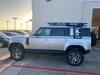
Thanks for making those points, Insider. Once I saw that both were frame-lifted and had big tires I figured this wasn't really an endemic problem with the 663. Glad to hear it. And I think you are spot-on with the 2nd part of point 4, the mass of the rotating components. Impressive looking stuff under there.

TReK
Joined: May 2021
Posts: 2,582
Likes: 3,655
From: Kirkland WA
Yeah. Same thoughts. Bigger tyres with all sorts of jiggery pokery going on to cater to them puts this failure in context. Not a worry for the likes of me, the average schlub running stock 32's.
The additional rotational resistance with 35"s (assuming they were 35+"s if someone had gone to the trouble to do a sub-frame lift) is going to be outside all the design specs for the OEM shafts. Great fun no doubt, but CV failures comes with the territory of modding vehicles thusly.
Not many lifted defenders on coils I guess. Any of @sarek 's beauties affected?
The additional rotational resistance with 35"s (assuming they were 35+"s if someone had gone to the trouble to do a sub-frame lift) is going to be outside all the design specs for the OEM shafts. Great fun no doubt, but CV failures comes with the territory of modding vehicles thusly.
Not many lifted defenders on coils I guess. Any of @sarek 's beauties affected?
A few thoughts:
1) Failure during a perceived minor encounter does not translate to that being the primary cause for the failure. Unless you are the owner and know what the vehicle was subjected to prior to the failure you cannot point to the most recent encounter as the cause. Those vehicles might have been subjected to extreme abuse prior to the event.
2) The Defender has a more robust powertrain, chassis, shafts, control arms, etc than the Discovery 3. There is no scenario where a D3 is going to be more robust than a new Defender. Arguably, the significantly greater weight of the D3 puts more strain on its moving components.
3) How were these vehicles modified? Placing joints at extreme angles can cause premature wear in short order and damage. Especially if you cruise at highway speeds in a permanently elevated mode.
4) The new Defender was subjected to hundreds of thousands of test miles in incredibly abusive situations. We had teams tasked with trying to break the car and find failure points. I would put a new Defender up against any new SUV in the world for strength/durability in harsh situations. Part of the reason the fuel mileage isn't particularly great is the sheer rotating mass of the components on this vehicle.
5) I have't heard a word from any market about warranty claims on axles (which I assure you would have people in a frenzy looking for answers).
1) Failure during a perceived minor encounter does not translate to that being the primary cause for the failure. Unless you are the owner and know what the vehicle was subjected to prior to the failure you cannot point to the most recent encounter as the cause. Those vehicles might have been subjected to extreme abuse prior to the event.
2) The Defender has a more robust powertrain, chassis, shafts, control arms, etc than the Discovery 3. There is no scenario where a D3 is going to be more robust than a new Defender. Arguably, the significantly greater weight of the D3 puts more strain on its moving components.
3) How were these vehicles modified? Placing joints at extreme angles can cause premature wear in short order and damage. Especially if you cruise at highway speeds in a permanently elevated mode.
4) The new Defender was subjected to hundreds of thousands of test miles in incredibly abusive situations. We had teams tasked with trying to break the car and find failure points. I would put a new Defender up against any new SUV in the world for strength/durability in harsh situations. Part of the reason the fuel mileage isn't particularly great is the sheer rotating mass of the components on this vehicle.
5) I have't heard a word from any market about warranty claims on axles (which I assure you would have people in a frenzy looking for answers).
1. Agreed I do know the history of birth h vehicles and drivers very well. The trucks are wheeled but they are certainly not abused.
2. I agree again, I was using the LR3 as a point of reference for a well known independent suspension truck for comparison that many have wheeled previously.
3. One was a simple rod lift. The other was a full subframe lift. Which keeps the CVS within stock parameters. I agree on the changes in angles causing early component failure. I have had two CVs fail recently myself after lifted use. But at 180k miles I wasn't particularly shocked either. Both were kind enough to give me warning. The rod lift truck cruises just high enough to clear 33's. The subframe lifted truck is running 34's
4. I to had heard read that previously
5. No data on that so that begged the question and reason for the thread, a few people on the trail said this was not the first failures they had heard of. So I was curious to see if the actual people with broken shafts were around the to confirm. I was impressed that the dealerships had the parts in stock however.
Not hear to bash or get anyone in the defensive just curious and figured this is the right group to be asking the questions.