


Tire air pressure --- New Definitions


Drifting
Joined: May 2022
Posts: 35
Likes: 31
 Dynamic on the Display
I have noticed that the target value changes on the information display and varies with temp. Nice to see this. Most of my BMW M cars showed current pressure and temp but not a dynamic target pressure.


Rock Crawling
Joined: Dec 2012
Posts: 267
Likes: 241
From: AR
I've just inflated my rear BFG Ko2's to 48 psi and front to 46psi (its 100 degrees here) and I had been driving, so I'll wait for them to cool a bit and look at the readings.
Thanks for input everyone! I'm still thinking that for loaded down overland trip, roughly 50 psi for pavement and 35-ish for off-road.

Rock Crawling
Joined: Oct 2020
Posts: 457
Likes: 297
I think you have it right drcoop. Just stick to the sticker for heavy load on the highway and you’ll be fine. Just as another data point, my Experience instructor told me to leave my 20” adventures at heavy load off road unless you get stuck. I did actually get stuck on cape lookout pulling a trailer at 30, and easily pulled out when I lowered everything to 20. On rocks, personally I’d split the difference and go with 40, but we did have a very muddy day at experience and I had no problem on even the advanced course running full heavy load pressures. Even on K02’s I’d probably stick to no lower than 40 if my emphasis was in not flatting out in the middle of nowhere vs comfort.

Mudding
Joined: Aug 2013
Posts: 194
Likes: 86
I have my awesome BFG AT T/A KO2'a installed in size 275/55/20, on my P400. Loading down the vehicle for a two week journey on and off-road through the trails of northern NM and Southern CO (engineers pass, Imogene, etc.). I've read all the posts about airing down and not airing down, so the smart consensus seems to be to only air down MINIMALLY for rocky trails (no less than 30 PSI), and maybe a little more for sand dunes, but I don't plan to go crazy.
My main question is how high should I inflate for highway driving on these tires, with a heavy load? BFG's website says a max of 50 PSI, but I've seen other opinions here and there.
I've got a 100lb rooftop tent, 20 lb awning, jerry can and water-port all on the roof-rack, with a fridge, food, tools and all the gear needed for off-the-grid living for 2 people... so a significant amount of load weigh inside and on-top of the vehicle....
@umbertob posted some helpful info above, but can I really push the PSI upwards of 80PSI in these tires!? I was thinking maybe 50 for on-road and 30-35 for off. But maybe I'm thinking too low?
My main question is how high should I inflate for highway driving on these tires, with a heavy load? BFG's website says a max of 50 PSI, but I've seen other opinions here and there.
I've got a 100lb rooftop tent, 20 lb awning, jerry can and water-port all on the roof-rack, with a fridge, food, tools and all the gear needed for off-the-grid living for 2 people... so a significant amount of load weigh inside and on-top of the vehicle....
@umbertob posted some helpful info above, but can I really push the PSI upwards of 80PSI in these tires!? I was thinking maybe 50 for on-road and 30-35 for off. But maybe I'm thinking too low?
I have the same tire in the same size, but on 18s. I live and off-road in CO, which means a ton of rocky trails and I usually air down to 18-20psi. I am in Central CO and haven't been to engineers or imogen, but around here I find that the lower pressure greatly reduces slippage on the decomposing granite and shale that make up the majority of trails I find myself on. A bit of flex can also help reduce the risk of a slashed sidewall from those sharp chunks of rock littering the trails.
Just my experience...


Mudding
Joined: May 2022
Posts: 208
Likes: 226
From: Colorado
For what it’s worth - here’s another take I’ve used on countless vehicles to set base tire pressures for *on road*. It has produced a great rule of thumb for me for different loading conditions. Off road use is another matter as discussed above. Here’s how I approach it - nothing new - been done by many folks before
I chalk my tires and see where it rubs off. Clearly a flattish parking lot is best to test (or similar) as opposed to a heavily crowned road.
1. I set pressure to door jamb sticker and find a flattish chunk of hard top (Parking lots generally work well)
2. Run a wide, STRAIGHT, highly visible line of chalk across all tire treads
3. Drive vehicle in a straight line, without turning steering, low speed, for a few vehicle lengths (just want to remove some chalk but not erase it all)
4. Stop, physically look at chalk lines
Results:
Another option would be to start the testing from the maximum specified inflation pressure on the tire, run a chalk test, and review results. Work one’s way down in pressure at 5 lb increments and observe the results. Lather, rinse, repeat, based on vehicle load conditions.
It’s not an exact science, but the process has served me well.The above process provides me a reasonably accurate gauge to work from, and as I’ve noted in another thread I get consistently very good to excellent tire mileage (road hazards aside). Nothing fancy - but it works.
Hope that helps or provides some alternatives to consider
I chalk my tires and see where it rubs off. Clearly a flattish parking lot is best to test (or similar) as opposed to a heavily crowned road.
1. I set pressure to door jamb sticker and find a flattish chunk of hard top (Parking lots generally work well)
2. Run a wide, STRAIGHT, highly visible line of chalk across all tire treads
3. Drive vehicle in a straight line, without turning steering, low speed, for a few vehicle lengths (just want to remove some chalk but not erase it all)
4. Stop, physically look at chalk lines
Results:
- IF chalk is worn off in CENTRE of tire, but still present on inside/outside edges - tire pressure is generally HIGH, causing it to crown and wear the center, based on loaded weight.
- IF chalk is worn off of outer EDGES of tire, tire pressure is generally SOFT
- IF chalk is uniformly worn across the tread block, pressure is OKAY
- Adjust tire pressure, and/or vehicle load weight, up or down and repeat.
- A general pattern will emerge for setting a pressure for a given load condition
Another option would be to start the testing from the maximum specified inflation pressure on the tire, run a chalk test, and review results. Work one’s way down in pressure at 5 lb increments and observe the results. Lather, rinse, repeat, based on vehicle load conditions.
It’s not an exact science, but the process has served me well.The above process provides me a reasonably accurate gauge to work from, and as I’ve noted in another thread I get consistently very good to excellent tire mileage (road hazards aside). Nothing fancy - but it works.
Hope that helps or provides some alternatives to consider


3rd Gear
Joined: Oct 2022
Posts: 3
Likes: 12
From: Front Range, Colorado
I know this is is an older thread Ava reading through it I think I know the answer, but I just swapped over to snow tires (x-ice) for the winter and the tire folks inflated to 40psi. Max is 50 for these guys. Driving fine. I technically drive with a “light” load, just me and 2 dogs 95% off the time. If I stick at 40psi, which is what the tire place (well rated local place, very trustworthy) recommended, is it better if I leave the car on light or normal load? Both are triggering a pressure alert (too high or too low) so I’m not sure if it matters. How off does it need to be to trigger an alert? It’s more annoying than anything.


Drifting
Joined: Sep 2020
Posts: 30
Likes: 3
From: Coastal South Carolina
I have a 2020 Disco and have been running Falken Wilderness AT tires on it since I bought. The ride with those tires are the normal setting is terrible. At the light load setting of 37/34 the car rides like a dream! It's remarkable how sensitive the car's ride is even small changes in tire pressure (at least with those tires)!!

Drifting
Joined: Nov 2024
Posts: 34
Likes: 7
From: California
I have a 2020 Disco and have been running Falken Wilderness AT tires on it since I bought. The ride with those tires are the normal setting is terrible. At the light load setting of 37/34 the car rides like a dream! It's remarkable how sensitive the car's ride is even small changes in tire pressure (at least with those tires)!!
Very informative thread!
I recently acquired a 2023 110 V8, adjusted down the tire pressures to 34/37, with huge improvement in the ride for city driving.
I am now wondering - have I increased my roll-over risk with the "under-inflated" tires?
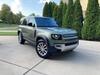
Plus, the V8 has Dynamic Response, which are active anti-roll bars, which helps mitigate body roll when cornering at higher speeds. Theoretically you have a lower roll-over risk than the standard models.