When you click on links to various merchants on this site and make a purchase, this can result in this site earning a commission. Affiliate programs and affiliations include, but are not limited to, the eBay Partner Network.
I am running into another issue putting my 97' Disco back on the road. Did head gaskets, filters, etc, and now it does not start by itself. It start fairly consistently when I send some starting fluid or fuel down the intake, and then runs just fine. Seemingly adequate power, no apparent misfiring and no leaks.
I've checked the fuel pressure regulator, which works fine and does not leak out when priming or cranking. Fuel pump primes fine and pressurizes the rail (although I don't know the exact pressure value), but when sitting the pressure drops in just a few minutes.
My current thoughts are the fuel pump and/or check valve, but the pump pressurizes enough for the engine to run smoothly. I will also be checking the injectors to make sure they fire properly while cranking, but this is odd as they obviously fire just fine when running.
Could there be an electronic stop to the injectors or other parts of the fuel system while cranking somehow?
After putting the engine back together it did start by itself a few times, but intermittently.
Any help would be greatly appreciated as I cannot wait to put it back on the roads and the trails!
First try resetting the Adaptive Values. Very important after rebuilding, especially if the TPS was moved. I use an app (GEMS Lite) on my tablet to reset, but some scanners can do it as well. Hope you have an OBD scanner that can monitor real time values (think O2 sensor voltages). A good way to scan the ECM is essential (even out on the trail).
Maybe try starting and driving with the MAF unplugged to see if that changes anything. Also really helpful to use a gauge to measure the fuel pressure at the rail (tap in at the schrader valve that is built in on the right side of the rail). With a pressure gauge connected, fuel pressure should hold up for an hour or even over night.
Make sure the throttle air passages (especially at the IACV and base idle bypass screw) are perfectly clean, throttle plate too. Also double check all the rubber tubes connected to vacuum are not leaking and in the right places. There are other points to diagnose, but try the simple stuff first, especially since it runs. The IACV should open during starts to allow more airflow to increase idle speed. Later, we should check the base idle RPM.
I’ll add a few thoughts, but people way more experienced than me on this issue will chime in soon.
As you’ve figured out, the issue is fuel delivery, not ignition. You’re right that the bleeding down of fuel pressure could be the fuel pump/check valve. Once running the pump itself seems to be fine. A leaking injector could also cause the loss of pressure.
Is it a cold start issue, does it start fine once it’s warmed up?
Thanks for the input and advice, I appreciate it, I'll check those things and report back as needed.
As for ECM scanning, I only have a BlueDriver, which is good for reading/clearing codes and reading real-time values, but I believe does not do bidirectional communication. I'll see if a buddy of mine has a more advanced device I can borrow in order to reset those adaptive values. I have not tinkered much with the TPS nor the IACV, but I'll take a look and clean them as well as the throttle as needed. I've been replacing some of the vacuum hoses as I go but I feel there might still be some leaking somewhere, so I shall investigate further.
One of the next things I'll be doing is checking the injectors to see if they fire while cranking as well as leak.
Good luck with the diagnosis work. The logic for checking for vacuum leaks is they can cause the MAF to read lower than actual, then the ECM will provide less fuel, but I think would need to be a very big vacuum leak to prevent starting. And a big vacuum leak can cause rough idle. How did you seal the upper and lower intake plenums?
My latest tool acquisition is a Lisle Noid Light 27800 for testing signals to fuel injectors. I spent a few more bucks on it because it features a longer cable and a suction cup for mounting on the windshield (handy when sitting in the driver's seat). It also has an adjustable plug, so can be used for almost any fuel injected vehicle. The light is simply a 12V incandescent bulb. The OBD blue tooth dongle I use is the OBD Link LX. I does everything I need (including resetting adaptive values) without costing a fortune. When the Adaptive Values are reset, they go back to factory values. These change over time based on engine performance and operating environment. So, those values (fuel trims, TPS base value, maybe others) in your ECM are suited to your old engine. As you drive, the fuel trims gradually adapt, but that takes some time.
Moving the position of the TPS can cause a condition of very high RPMs (over 1800) when started, that can be cleared by Resetting or by fiddling with the TPS to lower the closed position signal value. Point here is to carefully note the position of the TPS before moving it, since you will be working near there for cleaning. OK, let us know how it goes.
Here's an update on what I've discovered now, looking forward to hearing some thoughts about it.
I made my own "Noid Light" (simply using a breadboard, an LED and some resistors) and connected it to some of the injectors to see if they were firing without having to take them out. Since the engine itself runs, I know that they work, but I wanted to see if they got power when cranking. It seems the overall situation is better as it now somehow starts about half of the time (vs. ~10% of the time before), but what I found was that some or all of the injectors are sometimes getting powered continuously while the engine is not on and just on 'run' position, and pretty much every time they are, the engine does the same thing where it cranks but refuses to start. However, sometimes they lose power when the engine is off (as they should) and then when cranking it would start normally, and I could see the makeshift noid light flicker as it should. Based on my observations, it seemed that it would work fine most times after I heard the main relay click off, which it didn't seem to do consistently. But until then, it seemed the injectors would remain powered. My thoughts are that the main relay might be sticking on sometimes and causing the ECU to mess up or such, or a bad ECU, or some wiring issue somewhere.
Any thoughts?
Oh and @JohnZo as additional notes, when I got the engine running, I tried disconnecting the MAF sensor plug and the engine instantly died, is that what is to be expected? And I sealed the plenums with regular gasket maker, doesn't seem to leak.
As always any help is appreciated, I love this stuff but at this point I just want to drive the goddamn thing haha.
Good job with the DIY noid light! By design the eight injectors get constant 12V whenever the key is ON (run and start positions). That is normal. The ECU controls (i.e. switches) the eight ground circuits for the individual injector pulses. The main relay is designed to drop out after a short time delay (?10 sec?), when the key is turned to Off. Good you are listening for that. Make sure that relay is working properly first. After that, if needed, use the wiring diagram to help trace out the ground circuits. Remember, normally the injector ground wires are all open circuit until the ECU switches them.
Seems then like you might be having a ground circuit intermittent open for the injectors. Could be a loose or corroded connection(s), or a wire with broken copper strands (less likely), or the ECU. If it was the ECU, it probably would not run at all. If you have to get in there, maybe check that the ground wires (black) connected to the ECU are well grounded, clean and tight at the ground points. If the ground ends are good, next thing to check would be the terminal plug connector at the ECU itself. Unfortunately, the location of the ECU is prone to water ingress and moisture, so make sure it is all dry and shiny there, look carefully for signs of corrosion. Maybe try the jiggle method to test for bad connections while cranking. You might need longer arms.
I'm not surprised the engine died when the MAF was unplugged, but don't know if that is normal. Did you try to start it while the MAF was unplugged?
Very positive update today. I finally found the issue, turned out to be the throttle position sensor, which read pretty much full open throttle constantly (taking it apart slightly, internal issue in the potentiometer. Tested the wiring, reads position perfectly at various resistances), so I guess the ECU didn't like that when starting and would hold off on the fuel or such. When disconnecting its connector, starts every single but once out of 30 or so tries when plugged in.
Took it out on some trails on Saturday to test the waters and satisfy my excitement (see pics below ), and it started every time with no issues, albeit a slight but noticeable decrease in power and hesitant shifts, which I am hopeful will be solved with a new sensor.
Next I'll be getting a new sensor (feel free to suggest sites or places if you know any, P/N ERR4278, will be checking junkyards and such as well) and then using a friend's device to reset those adaptive values as well as suggested.
Still some little things to take care of (A/C recharge, interior fixes, etc.), but I fully consider it ready for the trails as is.
Thanks all for the help again, I greatly appreciate it!
Good job troubleshooting. Nice photos! Reminds me of the Cascades in WA.
Lucky8 has the TPS, FCP Euro, Rovers North too, but prices have gone way up. Maybe made out of gold now? Your OBD scanner should be able to read the TPS position real time. Closed typically reads around 10%, wide open near 80%. Low power might mean it's in limp mode, but resetting should fix that.



 D1 4.0 Doesn't Start Unless Helped


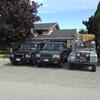


 ), and it started every time with no issues, albeit a slight but noticeable decrease in power and hesitant shifts, which I am hopeful will be solved with a new sensor.


