


hub nut


Thread Starter
|
Recovery Vehicle
Joined: Dec 2008
Posts: 1,175
Likes: 9
From: Chandler,AZ
 hub nut
quick question guys, I noticed a little jiggle in my steering wheel and upon inspection of the wheels and tires I noticed a little play in the front wheels while the truck was jacked up. I replaced my passenger wheel bearings a while back but was not 100% sure on how tight the hub nut should be, I attributed my play in the wheel to the hub nut being too loose. I was able to turn the hub nut about a quarter to half a turn tighter by hand so I went ahead and did that, I then threw the socket on there and gave it a little more torque (just by hand, no weight or anything) and then tightened the locking nut really tight (I remember having to work pretty hard to get this nut off so I assume it should be torqued pretty tight). the truck feels smoother now and my wheel play is gone. did I do this right or should that main hub nut have been pretty loose like it was?

The manual says..." fit hub adjusting nut & tighten to 61 Nm , back off the adjusting nut 90 degrees and retighten to 4Nm.....fit locknut and tighten to 61 Nm, tab over the lockwasher.
multiply Nm x .74 to get Ft/lbs
multiply Nm x .74 to get Ft/lbs

Baja
Joined: Mar 2010
Posts: 5,584
Likes: 7
From: Pittsburgh PA suburbs.
My question when I did mine was how the hell do you measure the torque using the special adapter for that nut. Could not figure it out or get an answer from anyone, so I snugged it up fearing to leave it too loose and have the wheel come off.
My cousin works in Maintenance and Inspection of Power Plant Boilers. He said their ground rule is: "Torque it until it breaks head from shaft, back off exactly one quarter turn."
I say tighten until it squeels just a little, then tighten it slightly more. Stop before snapping off head. If you develope the touch you learn when it is just hitting that elastic moment before snapping off.
My cousin works in Maintenance and Inspection of Power Plant Boilers. He said their ground rule is: "Torque it until it breaks head from shaft, back off exactly one quarter turn."
I say tighten until it squeels just a little, then tighten it slightly more. Stop before snapping off head. If you develope the touch you learn when it is just hitting that elastic moment before snapping off.

Winching
Joined: Jul 2006
Posts: 739
Likes: 5
From: west of chicago
No, you should crank it in to 61nm (45ftlbs.) to seat the bearings, then out 90deg. , then
tighten to 4nm (3ft.lb) then tighten the locknut to 45ftlb and bend tabs.
Your bearings will last a lot longer if you preload them correctly.
luck,greg

Baja
Joined: Sep 2007
Posts: 5,232
Likes: 52
From: Georgia, USA
Alternatively, I just base it on end float (0.010mm), which is what Rover is after with the tightening sequence in the manual.
These are the steps I follow:
Certainly there is nothing wrong with using the torque wrench method, but my hub nut tool uses a tommy bar so I can't use a torque wrench.
After 35 years of setting Series Rover hubs based on end float (that's the only method described for Series axles) I'm comfortable using this method. When done I have the tiniest detectable end float.
The downside is that a novice to the method may need to repeat step 7 a few times, but I've set enough that I usually don't need to.
These are the steps I follow:
- While rotating hub, tighten inner nut down until there is resistance to turning
- Back off inner nut
- Repeat step 1 (this ensures the bearings are fully seated)
- Back off inner nut
- While rotating the hub, tighten down inner nut until there is minimal end float
- Install locking washer and outer nut and tighten
- This will reduce end float further and you may have to remove the outer nut and lock washer and repeat steps 5 and 6 so you end up with the right end float.
Certainly there is nothing wrong with using the torque wrench method, but my hub nut tool uses a tommy bar so I can't use a torque wrench.
After 35 years of setting Series Rover hubs based on end float (that's the only method described for Series axles) I'm comfortable using this method. When done I have the tiniest detectable end float.
The downside is that a novice to the method may need to repeat step 7 a few times, but I've set enough that I usually don't need to.
Last edited by antichrist; Aug 22, 2010 at 06:51 AM.
Thread Starter
|
Recovery Vehicle
Joined: Dec 2008
Posts: 1,175
Likes: 9
From: Chandler,AZ
well first off I didn't replace my bearings this time so setting them isn't needed (I tried my best to follow the proper steps last time I did it. my concern is how tight my final setting was, I also have the big pressed tube socket with the holes in the sides so torquing is quite difficult, but I used my torque wrench first to try to get a feel for the right settings. anyways I had play in the wheel (I am guessing this is what is meant by float) and tightening it up seems to have helped alot.
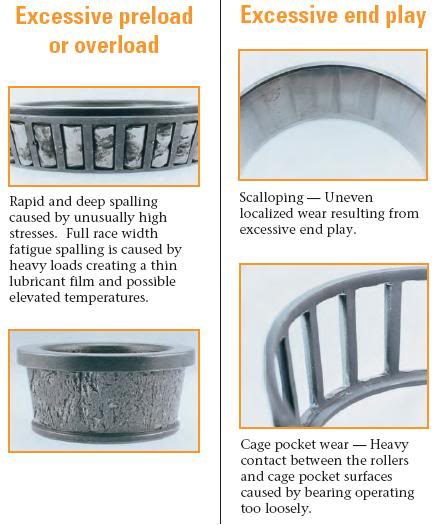
but again my biggest question still is unanswered, what are the consequences to over tightening the hub nut? and how much over tightening would be "acceptable"?
I don't want to be stuck on the side of the road because my wheel bearings are locked up! or maybe even something worse.
but again my biggest question still is unanswered, what are the consequences to over tightening the hub nut? and how much over tightening would be "acceptable"?
I don't want to be stuck on the side of the road because my wheel bearings are locked up! or maybe even something worse.
Winching
Joined: Jul 2006
Posts: 739
Likes: 5
From: west of chicago
I would agree with Tom if you Chris "have the feel"
I've done more bearings than I can remember, But I'd bought the socket (1/2") drive for $20 shipped to me.
I figured it'd pay for itself (4 hubs) in one use.
luck,greg
I've done more bearings than I can remember, But I'd bought the socket (1/2") drive for $20 shipped to me.
I figured it'd pay for itself (4 hubs) in one use.
luck,greg
Thread Starter
|
Recovery Vehicle
Joined: Dec 2008
Posts: 1,175
Likes: 9
From: Chandler,AZ
well I thought maybe the wheel had thrown a weight or something because at one point the tire started to wear (what I thought was) fast. I then replaced that tire and at one point checked for play in the wheel as my steering wheel also developed a shake. there was play in the wheel top to bottom and side to side, and I could see the rotor moving with it. I thought maybe if there was a balance problem that it maybe backed that nut up a bit (although it really isn't logical with the locking nut on there) and decided to see if tightening it a bit would help, the play in the wheel is gone and the wheel still seems to spin pretty free. I am not too concerned because I think I am going to replace all the front wheel bearings once it starts to cool off, I just wanted to make sure that if I over tightened it my wheel wouldn't lock up or fall off or anything unsafe like that.