


2003 Discovery II - SE7 Quickly Overheating / Coolant Leaking Out


Thread Starter
|
4wd Low
Joined: Jun 2017
Posts: 12
Likes: 0
From: Jacksonville
 2003 Discovery II - SE7 Quickly Overheating / Coolant Leaking Out
Landy has 119k Miles. One morning, temperature gauge spiked up until MIL turned on. Turned car off, 5 minutes after I restarted and all was OK. Following day, vehicle quickly overheated every ignition cycle then coolant started gushing out of the reservoir overflow hose. In all, I drove the car about 3 miles with this condition until I got to a safe place to park.
Am I in trouble? Blown head gasket, cracked Cyl heads.. not sure but I saw some coolant on Cyl3..
Any recommendation for a resolution would be appreciated.
New to this Forum, thanks in advance.
Am I in trouble? Blown head gasket, cracked Cyl heads.. not sure but I saw some coolant on Cyl3..
Any recommendation for a resolution would be appreciated.
New to this Forum, thanks in advance.

Pro Wrench
Joined: Dec 2016
Posts: 1,603
Likes: 229
From: Fall City, WA

Landy has 119k Miles. One morning, temperature gauge spiked up until MIL turned on. Turned car off, 5 minutes after I restarted and all was OK. Following day, vehicle quickly overheated every ignition cycle then coolant started gushing out of the reservoir overflow hose. In all, I drove the car about 3 miles with this condition until I got to a safe place to park.
Am I in trouble? Blown head gasket, cracked Cyl heads.. not sure but I saw some coolant on Cyl3..
Any recommendation for a resolution would be appreciated.
New to this Forum, thanks in advance.
Am I in trouble? Blown head gasket, cracked Cyl heads.. not sure but I saw some coolant on Cyl3..
Any recommendation for a resolution would be appreciated.
New to this Forum, thanks in advance.
first thought is t-stat but, lets take a look at that cyl3


Camel Trophy
Joined: Dec 2009
Posts: 3,890
Likes: 955
From: Charlotte
He said he saw coolant ON cylinder 3, not IN cylinder three. I'm not sure what on cylinder 3 means. To see coolant in cylinder 3 he would've had to remove the spark plug but he doesn't say anything about doing that. Perhaps he can clarify.
Maybe he meant in the vicinity of cylinder 3, which is where we might see coolant from a leaking throttle body heater.
It's true that coolant gushing from the reservoir overflow can mean a blown head gasket causing excess pressure in the cooling system but it can also be as simple as a $15 reservoir cap that lost its ability to hold pressure.
I'd also like to know whether not he popped the hood the first time the truck overheated to see what was going on, to see whether or not there was coolant in the reservoir.
I don't think we have enough information yet to say it's time to start tearing down the engine to replace the head gaskets.
Maybe he meant in the vicinity of cylinder 3, which is where we might see coolant from a leaking throttle body heater.
It's true that coolant gushing from the reservoir overflow can mean a blown head gasket causing excess pressure in the cooling system but it can also be as simple as a $15 reservoir cap that lost its ability to hold pressure.
I'd also like to know whether not he popped the hood the first time the truck overheated to see what was going on, to see whether or not there was coolant in the reservoir.
I don't think we have enough information yet to say it's time to start tearing down the engine to replace the head gaskets.
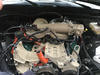
Landy has 119k Miles. One morning, temperature gauge spiked up until MIL turned on. Turned car off, 5 minutes after I restarted and all was OK. Following day, vehicle quickly overheated every ignition cycle then coolant started gushing out of the reservoir overflow hose. In all, I drove the car about 3 miles with this condition until I got to a safe place to park.
Am I in trouble? Blown head gasket, cracked Cyl heads.. not sure but I saw some coolant on Cyl3..
Any recommendation for a resolution would be appreciated.
New to this Forum, thanks in advance.
Am I in trouble? Blown head gasket, cracked Cyl heads.. not sure but I saw some coolant on Cyl3..
Any recommendation for a resolution would be appreciated.
New to this Forum, thanks in advance.
Test the block to make sure it is not cracked before rebuilding/deciding what to do.
Camel Trophy
Joined: Dec 2009
Posts: 3,890
Likes: 955
From: Charlotte
A cooling system pressure test is an important next step unless you can otherwise easily spot the source of the leak. The parts store chains have loaner tool programs and most have pressure testing kits in the program.
If you can, stop driving the truck until you complete the diagnosis and address the problem. If you must drive it be sure the cooling system is full before you leave home every time and carry a gallon of water with you.
When you refill the system be sure to bleed it of air using the procedure described on p.429 of the workshop manual linked below (commonly called the RAVE). If possible always bleed the system with the engine stone cold.
http://www.landroverresource.com/doc...hop_Manual.pdf
When you pick up the pressure testing kit make sure it has an adapter that fits the DII coolant reservoir. The adapter screws on in place of the reservoir cap.
Good luck, and let us know what you learn.
If you can, stop driving the truck until you complete the diagnosis and address the problem. If you must drive it be sure the cooling system is full before you leave home every time and carry a gallon of water with you.
When you refill the system be sure to bleed it of air using the procedure described on p.429 of the workshop manual linked below (commonly called the RAVE). If possible always bleed the system with the engine stone cold.
http://www.landroverresource.com/doc...hop_Manual.pdf
When you pick up the pressure testing kit make sure it has an adapter that fits the DII coolant reservoir. The adapter screws on in place of the reservoir cap.
Good luck, and let us know what you learn.
Last edited by mln01; Jun 29, 2017 at 08:18 AM.

Rock Crawling
Joined: Jun 2016
Posts: 374
Likes: 66
From: Virginia
I hate to say it, but sounds like a bad HG or cracked block. It's most likely a cracked block if you are pressurizing the coolant system from cylinder 3, which is an internal cylinder. Sorry. I really hope it ends up being something simpler / cheaper.
Last edited by dtmbinb; Jun 29, 2017 at 11:20 AM.


