


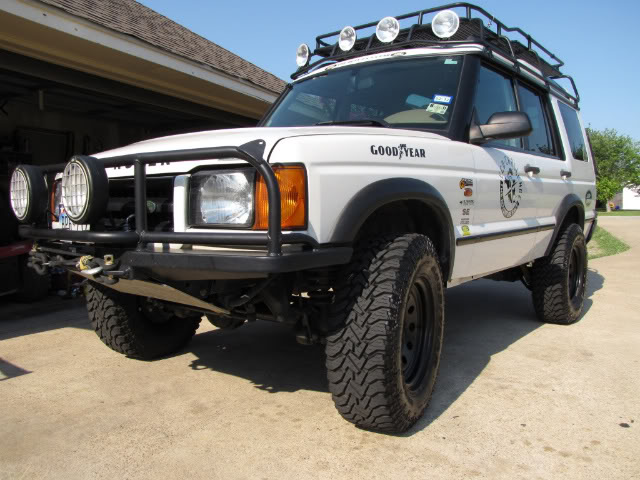
Aftermarket front bumper build.


Pro Wrench
Joined: May 2010
Posts: 1,918
Likes: 86
From: St Louis MO

That cross bar is there for the lower valance of the factory bumper to have something to attach to (if the bolts, bolt holes, or entire bar haven't rusted through). It offers little structural stability as far as I could see, which is why mine is in my scrap metal pile.

Thread Starter
|
Overlanding
Joined: Jan 2015
Posts: 20
Likes: 1
I have no problem at all getting rid of it, if it has no structural use, but I have to consider the sale of this product, and the ease of installation for those with a lower mechanical skill level. At this point, it would not be "bolt on". In your opinion, will this affect the sales?

Baja
Joined: Feb 2011
Posts: 9,298
Likes: 318
From: Boston Strong
if your building your self a bumper great if your building for the masses you need to listen to them.
you need to get that bumper as close to the grill as possible, your ****** points should be wielder or cut not bolted.
dont worry about the washer bottle TF didnt just ship a plate to cover it, the owner can relocate to the fire wall if they wish.
also cut down the back edge of the bumper that way if you are not running a winch you will not have to cut your grill
you need to get that bumper as close to the grill as possible, your ****** points should be wielder or cut not bolted.
dont worry about the washer bottle TF didnt just ship a plate to cover it, the owner can relocate to the fire wall if they wish.
also cut down the back edge of the bumper that way if you are not running a winch you will not have to cut your grill

This is why we ask questions. I was never aware that there is a relocation kit for the washer tank (probably couldn't find it on the lucky 8 website)...Lol...Just kidding...no seriously, send me a link. What I'm trying to do is build a bumper that looks good, is functional, and doesn't cost a fortune. I've been in fabrication for years, just not with rovers, and they are awesome. If I'm hearing you right, you would much prefer the bumper without the skid plate? As I said earlier, Thanks much for the input! It's very helpful! We're gonna work on the design some more and get it in metal hopefully next week. I'll update then.
What ballpark price range do you think this will fall into after steel, fabrication and finishing costs, before shipping?
Link for relocation kit - Lucky8 Llc. - Take the road less traveled...

Winching
Joined: Mar 2013
Posts: 563
Likes: 9
From: Birmingham, AL
Most people are going to prefer a slim/higher clearance bumper. Look at Safari Gard and Rovertym. I am not saying make a exact copy, but maybe draw some inspiration from them for a slimer design.




Mudding
Joined: Mar 2014
Posts: 157
Likes: 3
Are these rigs really that offroad capable? All they need is just a lift, tires, and bumper mods really all they need to crawl?
Just seem too heavy, underpowered, top-heavy.
Just wondering out loud, no offence intended, just an honest question.


Mudding
Joined: May 2014
Posts: 235
Likes: 8
From: Al Ain, UAE
I have to agree with the other posters - the proposed shape has everything 180 degrees out from what the users will need.
The front hangs low, reducing ground clearance and approach angles - it's going to dig into the dirt like the blade of a bulldozer and make off-road progress very difficult. It needs to sit high, close to the grille and the rest of the front end with the lower surface sloping down like the other pictures posted.
10/10 for effort but a long way to go.
The front hangs low, reducing ground clearance and approach angles - it's going to dig into the dirt like the blade of a bulldozer and make off-road progress very difficult. It needs to sit high, close to the grille and the rest of the front end with the lower surface sloping down like the other pictures posted.
10/10 for effort but a long way to go.

Winching
Joined: Oct 2012
Posts: 676
Likes: 43
The Rover is limited by the body and drivetrain to 33 inch tires or so, which is the biggest factor in crawling. There's been some people fit larger, but only with high risk to the drivetrain or extensive, costly modifications. The "masses" typically stop at 33's or so. Practically all the crawlers I've ever wheeled with are on 37's or larger, and they're not just mud trucks. They're typically linked with coilovers. If I go out on a local run, there's usually six or seven Jeeps, mostly Wranglers, some XJ's, and some Grand Cherokees, and a couple Toyotas, usually Tacomas or 4Runners with Dana 60 swaps. Just the tires range from 37 to 42. They few other rigs with 35's are 80 inch wheelbase CJ's. The Rover's 33's are dwarfed. Even taking the bypasses I will get hung up on the differentials several times.
There's nothing wrong with 33's, but for crawling they're about the right size for a single-seater with a shorter wheelbase, a narrower track, and no overhang. The Rock Ware chassis is the closest thing I've seen based on the Rover frame and drivetrain. It's biggest limitation is the Rover axles. More people opt for something that will fit a 60 in front and at least that in the rear.
Where the Land Rovers do much better is with general 4x4 use. They can be modified up to the point where they're not comfortable on the highway anymore, so if you keep the road manners decent, they will be better than a crawler for adventures that have a lot of highway as well as offroad travel. Some people add the glamour of "overlanding," but I think that's pretentious and I have better things to spend on. I just consider that I don't want to trailer to the trai,l and that I want it to carry my family, and not just myself and 900 pounds of camping gear just for me.
