


Hard Overheat damage assessment


Thread Starter
|
Three Wheeling
Joined: Apr 2015
Posts: 77
Likes: 1
From: Missoula, MT
 Hard Overheat damage assessment
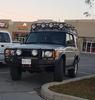
Just bought a super nice D2 that has everything I want on it, but the motor gave it up under the tough hands of the ignorant. The guy overheated it, let it cool off, overheated it again and ran it till it stopped. I topped it off with coolant (it took a gallon), checked the oil which looks fine, and cranked it over. There is exhaust coming out of the drivers side between the head and the block, and some knocking from what sounds like that same side in the head. It almost starts, putters along for a bit then quits. Any advice to look for when I pull the heads? At least head gaskets I know. What are typical fail points in this sort of overheat scenario (that I know so many Rovers have been through)? I have two other Rovers so I'm not new to their woes.
Thanks!
Thanks!

Mudding
Joined: Apr 2013
Posts: 192
Likes: 29
From: Cobourg, ON, Canada
Take the heads off and carefully inspect the block for cracks. Knocking in the head is far from a dead engine. Inspect the valve train and repair/replace as necessary. A pressure test before you tear into it will tell you a bit about the condition of the pistons/rings and would be worth doing. You'll 100000% need to send the heads to a machine shop to be skimmed as they have without a doubt warped. Also check for the flatness of the block mating surface and machine that if necessary.

I’ve seen a few D2’s with externally blown out HG’s on the outside of the HG. It’ll sound like an old british spitfire. If you’re lucky thats all it is and if you get the heads redone, new HG’s you could be good to go. Or it could be more serious and that’s just a side effect of whatever else went on inside the engine. Cracked blocks are usually on the outer sleves by the coolant channels and inner cylinders like #6, #5, #4, and #3 can have external failures (seen it on #6 a few times).

Recovery Vehicle
Joined: Jun 2017
Posts: 1,238
Likes: 240
From: Alabama + Vegas + Texas
Keep in mind that it isn't ONLY the damage done by the overheating condition, but also that something as yet unknown caused that overheating.
You'll want to pull the heads and pressure test the block. No need to fix *anything* if the block is cracked. I mean, you could, but mostly it will waste your time/money.
IF... if the block is not cracked, then you can drain whatever is left of the oil and remove the oil pan to enable you to change the rod bearings and main bearings from underneath the vehicle (or if you are motivated, to pull the motor and replace those bearings plus the cam bearings) in order to fix any rod knocking sound from deep within the motor.
Then you'll want to insure that the overheating condition doesn't return so the inline thermostat mod would be good at this point, plus ARP studs and all-metal Cometic head gaskets to fix any head gasket and/or slipping sleeve issues.
Same for verifying or replacing your radiator, clutch fan, and water pump.
You'll want to pull the heads and pressure test the block. No need to fix *anything* if the block is cracked. I mean, you could, but mostly it will waste your time/money.
IF... if the block is not cracked, then you can drain whatever is left of the oil and remove the oil pan to enable you to change the rod bearings and main bearings from underneath the vehicle (or if you are motivated, to pull the motor and replace those bearings plus the cam bearings) in order to fix any rod knocking sound from deep within the motor.
Then you'll want to insure that the overheating condition doesn't return so the inline thermostat mod would be good at this point, plus ARP studs and all-metal Cometic head gaskets to fix any head gasket and/or slipping sleeve issues.
Same for verifying or replacing your radiator, clutch fan, and water pump.
If it's leaking out between the head/block it's going to sound awful. So like mentioned above tear it down, check your block, and go from there.
I bought an 04 D2 once with a blown HG on the #6 cylinder. Sucker had been sitting for 3-4 years. Owner had it at his parents ranch that they were selling so I got it cheap. Met the owner out there, brought a battery, and once we cleared a path to it, added some fuel, installed the battery and it fired right up. Sounded awful, but it ran cool so once I fixed a few small things I had to slap it into 4Lo just to free it from it's grassy grave. I let it idle, then I said F it, and drove it 75 miles home along some back roads. Only thing that gave me trouble was an alternator that took a dump, but I got it home before dark. I had mainly bought it for the off road hardware, 5 new steel wheels (in the boxes), a ton of spare parts, and for the adventure (Roadkill style). I took off what I wanted, replaced the alternator, cleaned out the interior, (exterior was a cool OD green military truck paint job that looked cool), and I sold it 2 days later for the exact price I bought it for minus all the extras I got off of it. The guy that bought it replaced the HG on that side and said it ran great.
I love my reliable personal LR's, but something about saving one from 4ft of grass, jumping in it, and driving it home = fun to me lol
I bought an 04 D2 once with a blown HG on the #6 cylinder. Sucker had been sitting for 3-4 years. Owner had it at his parents ranch that they were selling so I got it cheap. Met the owner out there, brought a battery, and once we cleared a path to it, added some fuel, installed the battery and it fired right up. Sounded awful, but it ran cool so once I fixed a few small things I had to slap it into 4Lo just to free it from it's grassy grave. I let it idle, then I said F it, and drove it 75 miles home along some back roads. Only thing that gave me trouble was an alternator that took a dump, but I got it home before dark. I had mainly bought it for the off road hardware, 5 new steel wheels (in the boxes), a ton of spare parts, and for the adventure (Roadkill style). I took off what I wanted, replaced the alternator, cleaned out the interior, (exterior was a cool OD green military truck paint job that looked cool), and I sold it 2 days later for the exact price I bought it for minus all the extras I got off of it. The guy that bought it replaced the HG on that side and said it ran great.
I love my reliable personal LR's, but something about saving one from 4ft of grass, jumping in it, and driving it home = fun to me lol
Thread Starter
|
Three Wheeling
Joined: Apr 2015
Posts: 77
Likes: 1
From: Missoula, MT
Thanks all, I'll pull the heads, watch the Atlantic British head gasket youtube video, and see what I can see. Since it looks like the head gasket failed to the outside of cylinder #6 or #7 where it is blowing out "exhaust", I'm hoping it's possible that the sound is the dieseling of the cylinder as the rest of the cylinders pull the dead one along. It does sound like that, like when you shut your car off and it runs on a bit. What's going to happen? Things like "pressure testing the block" and "machining the block" are out of my mechanical league. The machine shop can check out the heads. Cracks in the block, I'll inspect it as much as I can with the heads off and look at the cylinders. It just had an oil change, it is full of oil that looks essentially new/fine, 15-40 from September 12th (receipt in glove box!).
I'll let you all know what I see when I open her up! Sure is a beautiful car though.
I'll let you all know what I see when I open her up! Sure is a beautiful car though.
Yeah I’ve watched to much Roadkill I think lol, but it sure makes for a fun time. I personally love the looks on the previous owners face once I get it running and driving vs just being yard art.
My 99 D2 had sat abandoned for 6-8 months, and I fired it up and drove 5hr home with no issues.
My 99 D2 had sat abandoned for 6-8 months, and I fired it up and drove 5hr home with no issues.
Thread Starter
|
Three Wheeling
Joined: Apr 2015
Posts: 77
Likes: 1
From: Missoula, MT
Head Resurfacing - how many times?
Well I got the whole thing apart, the head gasket was leaking to the outside on the third cylinder from the front, drivers side. Then I found a piece of head gasket laying in the block; the third cylinder from the back passenger side had completely blown it out! that was a 3" piece of head gasket missing and a dropped valve seat on that cylinder. I bought a flat bar, and the block passes .002" except back by the water port on the drivers side (very back of the block, where between the cylinder liner and the water jacket where it is between .002 and .003.) It does not appear that it was leaking there. Block "looks fine", I can't see any cracks or evidence of cracks.
Turns out the heads are rebuilt, they have the overheat button on them. They don't pass .003", not even close. I read in the manual .005" is the max they can be worked. I assume if they have been rebuilt, they were already resurfaced once. In the Atlantic British video, he says if too much is taken off, your intake manifold bolts won't line up. Does anyone know the max that can be taken off? Will the machine shop know how much has been taken off, and how much more they can be taken down?
Thanks
Turns out the heads are rebuilt, they have the overheat button on them. They don't pass .003", not even close. I read in the manual .005" is the max they can be worked. I assume if they have been rebuilt, they were already resurfaced once. In the Atlantic British video, he says if too much is taken off, your intake manifold bolts won't line up. Does anyone know the max that can be taken off? Will the machine shop know how much has been taken off, and how much more they can be taken down?
Thanks