


Need help with a p38

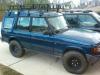
 Need help with a p38
2000 Range Rover 4.0
Cranks fine but won’t even try to catch.
Spark Tested. No Spark
Checked all fuses
Tried Emergency Key Access Code 1515.
Mine is unknown and the dealers (2) deny EKA exists
Disconnected Battery. This worked once but then not again
Tried keys vs FOB transmitter
Normally everything else works fine but just no spark.
Does any one have suggestions ?
Any help or prayers will be deeply appreciated.
Thank You.
Cranks fine but won’t even try to catch.
Spark Tested. No Spark
Checked all fuses
Tried Emergency Key Access Code 1515.
Mine is unknown and the dealers (2) deny EKA exists
Disconnected Battery. This worked once but then not again
Tried keys vs FOB transmitter
Normally everything else works fine but just no spark.
Does any one have suggestions ?
Any help or prayers will be deeply appreciated.
Thank You.

Super Moderator
Joined: Jan 2011
Posts: 16,322
Likes: 88
From: Savannah Georgia

Immobilized?
from the ETM for Range Rover:
of the Description and Operation Workshop Manual
and
From that last two lines, it would appear that if the truck is turning over, it has not engaged the immobilization command.
from the ETM for Range Rover:
The function of the engine immobilisation system is to prevent unauthorised starting of the
vehicle. The system is controlled by an immobilisation ECU which is located beneath the
centre console, adjacent to the handbrake. Re-mobilisation is achieved via a transponder in
the vehicle key, which is read by a transponder coil when the ignition switch is turned to the
'auxiliary' position. The transponder coil is mounted around the ignition switch.
For a detailed description of the engine immobilisation system, refer to the
vehicle. The system is controlled by an immobilisation ECU which is located beneath the
centre console, adjacent to the handbrake. Re-mobilisation is achieved via a transponder in
the vehicle key, which is read by a transponder coil when the ignition switch is turned to the
'auxiliary' position. The transponder coil is mounted around the ignition switch.
For a detailed description of the engine immobilisation system, refer to the
Security section
of the Description and Operation Workshop Manual
and
If the immobilisation ECU (C0059) has received a valid signal from both the transponder coil
(C0049) and the steering column interlock ECU (C2055) when the ignition switch is turned
to the crank position, it transmits a rolling code to the Engine Control Module (ECM) (C0331)
on a BP wire.
The immobilisation ECU (C0059) also provides a feed to the interlock relay (C1455) on a B
wire. The energised interlock relay (C1455) provides a feed to the starter motor relay
(C0179) on a B then BY wire.
(C0049) and the steering column interlock ECU (C2055) when the ignition switch is turned
to the crank position, it transmits a rolling code to the Engine Control Module (ECM) (C0331)
on a BP wire.
The immobilisation ECU (C0059) also provides a feed to the interlock relay (C1455) on a B
wire. The energised interlock relay (C1455) provides a feed to the starter motor relay
(C0179) on a B then BY wire.
From that last two lines, it would appear that if the truck is turning over, it has not engaged the immobilization command.
Good news! we where able to get her started and proceed to take her for a test drive.
Bad news. got .6 Miles away from home (I had no shoes, and we both forgot our cells). and the rover stalls. The Little read out display said "alternators fail" so she stalls out, to add insult to injure we where in a dip in the road so we couldn't really cost back. Long story short I now knowe how to tow another rover.
We jumped the p38 but had no luck.
We started her by opening all 4 doors with the key in the ignition and satisfied the BECM. The battery read 12V when she stalled. OH one last thing theres a 300lbs cash register in the back of the p38, not sure if that could upset the BECM.
Thanks for the help!
Bad news. got .6 Miles away from home (I had no shoes, and we both forgot our cells). and the rover stalls. The Little read out display said "alternators fail" so she stalls out, to add insult to injure we where in a dip in the road so we couldn't really cost back. Long story short I now knowe how to tow another rover.
We jumped the p38 but had no luck.
We started her by opening all 4 doors with the key in the ignition and satisfied the BECM. The battery read 12V when she stalled. OH one last thing theres a 300lbs cash register in the back of the p38, not sure if that could upset the BECM.
Thanks for the help!

Pro Wrench
Joined: Feb 2008
Posts: 1,706
Likes: 3
From: Meridian, Idaho
Are you getting any kind of alarm faults, and how is the condition of the battery cables? This problem could be caused by so many different things. I would look at the fuse box, might even consider opening it up to look for corrosion. The BECM might be on its way out, it happens as these things age. One other thing, is your key fob synced up?
Super Moderator
Joined: Jan 2011
Posts: 16,322
Likes: 88
From: Savannah Georgia
Collin,
Time to get out the digital voltmeter and look for wiring problems, low battery voltage, etc. Maybe even a marginal alternator. If alternator is charging the battery at about 14.1 volts, what happens when you turn on lots of devices (head lights, AC, fan on high, radio on)? The voltage still needs to be in the mid 13 volt range. The electronics on anything after 1999 needs a very good battery, can't get by with a marginal one like an old Chevy can. The large cables from the battey and fuse box that use bolts or screws to hold them in place can become oxidized or corroded, they can be cleaned up with a wire brush (on all sides). Bad connections can make even a good battery seem run down to the electronics down stream.
Time to get out the digital voltmeter and look for wiring problems, low battery voltage, etc. Maybe even a marginal alternator. If alternator is charging the battery at about 14.1 volts, what happens when you turn on lots of devices (head lights, AC, fan on high, radio on)? The voltage still needs to be in the mid 13 volt range. The electronics on anything after 1999 needs a very good battery, can't get by with a marginal one like an old Chevy can. The large cables from the battey and fuse box that use bolts or screws to hold them in place can become oxidized or corroded, they can be cleaned up with a wire brush (on all sides). Bad connections can make even a good battery seem run down to the electronics down stream.

Thread
Thread Starter
Forum
Replies
Last Post
LRRange
General Range Rover Discussion - Archived
3
Feb 27, 2020 09:09 AM
faversham
General Range Rover Discussion - Archived
2
Sep 2, 2009 07:19 PM
afox04
General Range Rover Discussion - Archived
3
Apr 28, 2008 10:13 AM
red rockett
General Range Rover Discussion - Archived
2
Apr 10, 2008 10:24 PM
