When you click on links to various merchants on this site and make a purchase, this can result in this site earning a commission. Affiliate programs and affiliations include, but are not limited to, the eBay Partner Network.
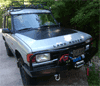
A few weeks ago I purchased a 1996 Discovery I SE. It has just over 156K miles on it and several issues, which I guess is normal. This thread will serve as a restoration thread as well as a general guide for what ownership for these vehicles can look like. I have a similar thread going for my M5 on another thread and people seem to like it. So here it goes!
Oil Change 15 December 18, 157,302 Miles
Reason: Unknown when last oil change was and very low oil level
Cost: $50-$75
Things You Will Need:
1 1/8 Socket/Wrench
7 Quarts of Oil (I used 5W-40)
New Drain Plug
New Copper Washer for Drain Plug
Oil Filter
Oil Drain Pan
Filter Wrench of Some Sort (Optional)
Step 1: Get Under the Truck and Prepare the Engine
You can either get directly under the truck or you can elevate the passenger side of the truck. Made sense to me to lift the passanger side since the drain plug is located on the side of the pan.
Remove the oil fill cap to assist with draining
Step 2: Drain the Oil
Locate the drain plug.
Place your drain pan under the drain plug.
Use the 1 1/8 wrench to remove the plug.
Look at everything else wrong with the truck while it drains.
Step 3: Fill with Oil
Replace the drain plug and copper washer.
Put 6 quarts of oil back in.
Check for leaks
Step 4: Replace Oil Filter
Hopefully you can remove your filter by hand or wrench. Unfortunately I didn't have a wrench large enough for the filter and had to improvise.
The last person to change the filter must have torqued that thing down as hard as possible. I had to use a large jaw plier and tried drilling a hole through it and using a screw driver to take it off. A combination of all of those methods eventually worked.
Drain the oil from the filter into your drain pan.
Make sure none of the filter gasket is left behind.
Clean filter mating surface.
Fill new filter 1/2 way with new oil and coat the gasket with fresh oil.
Screw on new filter HAND tight.
I know I'll probably get crap for the filter I used but I'll use a larger one next time as well as some LiquiMolly Oil.
Step 5: Clean up and Check for Leaks
Clean everything up and lower the car if you jacked it up.
Double check that everything is tightened down.
Check oil level, add oil if needed.
Start the truck and check for leaks then turn off.
This is actually an extremely helpful visual approach at helping/learning to change the oil.
This will also be most helpful to newer owners/users in the future.
I spent a lot of time over the holidays doing a little bit to the Disco here and there and finally have the time to update this post. Unfortunately the truck has mostly sat since I bought it due to a few headaches that will be detailed below, but nothing terrible.
Thermostat Change/Coolant Drain, Fill, & Bleed 30 December 18, 157,302 Miles
Reason: Engine not coming up to temp and heater not blowing hot air.
Cost: $25-$75
Things You Will Need:
Thermostat and Gasket ( ETC4765K )
Radiator Fill Plug - Recommended - ERR4686G or ERR4686B
Oring or Dring for Drain Plug - Recommended -
New Expansion Tank - Optional -
3-4 Gallons of Green or Blue (BMW) Coolant
Distilled Water if you don't get 50/50 of the above
Flat head screw driver
8-12 mm Socket and/or Wrench
Adjustable Wrench
Drain Pan or Bucket
Razor Blade or Plastic Scraper
Step 1: Prepare the Truck
Make sure the engine is cool enough to work on
Place your bucket under the car, right passenger side corner
Remove overflow tank cap
Remove radiator fill plug
Step 2: Drain the Coolant
Use your screw driver or 8mm socket to loosen the clamp on the lower radiator hose. This is located at the bottom right of the passenger side of the radiator
Depending on how the close is situated, you can get access to it via the top of the car, the bottom of the wheel well, or directly below the radiator. I chose to access via the top of the vehicle
Once it is loose enough, move it up the hose and out of the way
Using your screw driver again, pry around the radiator hose to break the seal, then pull the hose off of the radiator
Try to catch the coolant as it comes out
*If you don't need/want to change this much coolant, you can drain "just enough" via the water pump to make the thermostat job a little easier*
Step 3: Remove Old Thermostat
Using a 12 mm socket (I think) remove the thermostat housing bolts
Remove the thermostat housing
Using your razor blade or plastic scraper, remove and old gasket that remains on the mating surface
Use your fingers or a pair of pliers to remove the thermostat
New on the left, old on the right
Step 4: Install New Thermostat
Insert the new thermostat with the bleeder hole pointed at the 12 O'clock position
Put bolts through the thermostat housing holes
Put new gasket over the bolts, this should mostly keep it in place while you tighten the housing down
Torque the bolts down per the RAVE or just use common sense and tighten it down good and tight
Step 4.5: Install New Expansion Tank - Optional -
Remove nuts and bolts
Remove coolant lines from tank
Attach coolant lines to new tank
Reattach nuts and bolts to new tank
Step 5: Fill Cooling System With New Fluid and Burp/Bleed the System
Reattach lower radiator hose and tighten hose clamp
Fill the expansion tank with the proper mixture of coolant and water until it stays just above the max mark
Squeeze several times any large coolant hoses you see, this should help circulate coolant and get some of the air out, refill overflow tank if necessary
Start car and set climate control to max heat
Check for leaks, fix if any are present
You should see some action where the radiator fill plug was, it may even overflow some
Continue to squeeze the coolant hoses, this should cause coolant to come out of the fill plug, keep overflow tank full during this process
Once you feel like no more large air bubbles come out of the fill plug then reinstall your new plug and O ring
Turn car off or drive around
After the truck stays at operating temperature for a good bit of time, it should purge itself of any remaining small air bubbles
Do a final check when car is cold, and fill overflow tank if needed
Step 5.5: Fixing a Broken Fill Plug
If you are stupid like me and try to reinstall the old plastic fill plug, chances are it will break to some degree
Mine got threaded pretty deep but the top twisted off while tightening it. The plug seemed to be fused into the threads of the radiator
I first tried using a left handed drill bit, but this made things worse
I then used a Dremel with a cone shaped stone-like material tip to cut four notches cross-ways that got as close to the radiator threads as I could get
Then I used a flat head screwdriver and a hammer to whack at the plastic cap, I whacked towards the center of the fill plug
Once the plastic was free of the threads, I was careful to not get any large chunks of plastic to fall into the radiator
I then used the Dremel with a metal brush attachment to clean the radiator threads
I chose to replace my old plug with a new plastic one for two reasons
It is cheap enough, even at the dealer that I could replace it often enough I don't have to worry about the plastic breaking down again
I have read several threads where people have had issues with the brass plug. I wonder if this is because of the O-ring seat in the plug. The plastic plug has a recessed area the ring sits in, not sure if the brass one has the same "seat".



 Disco I Ownership Thread




 >
>