When you click on links to various merchants on this site and make a purchase, this can result in this site earning a commission. Affiliate programs and affiliations include, but are not limited to, the eBay Partner Network.
Disclaimer: I am NOT a mechanic, have a pretty basic, conceptual understanding of car parts, but that's about it. Definitely eager to learn.
So, I'm looking at a 1999 DII with 110K miles for $4000. It looks pretty good on paper, but naturally I want to give it a thorough inspection.
I've been reading through the forums and can see that the main bad guys for these models are the front driveshaft, the head gasket, and the thermostat.
The current owner doesn't know whether they've had work done, so I'm not assuming anything at this point.
I'm going to go see the car myself this weekend, so I wanted to know what to look for so I can get these out of the way in my head before I have a mechanic give it a full inspection – a neighbor of mine has a beautiful old Defender, so he gave me his guy's number.
What am I looking for in terms of the front driveshaft? How can I tell whether it's been rebuilt using grease-able u-joints? Also, is lubing the driveshaft something I would potentially be able to do myself in the future?
Ditto for the head gasket. I found this very informative post, but if there's anything you'd add I'd be grateful.
As for the thermostat, I haven't been able to find how to tell whether it's the original one or it's been replaced. Everyone just seems to say it's a must to replace the original for a 180F thermostat.
Everything else on the D2 can be replaced without to much cost or time if you do it your self.
Engine/Transmission/Transfer Case: Doe the engine make any funny sounds like ticking or tapping? Check where the oil is filled, is there any foam, maybe bad head gaskets. Does the coolant look fresh or old. Does the transmission shift smooth? Does the transfer case shift from high to low and back to high?
In reality buying a used car is a crap shoot when it comes to the engine. With only 110,000 miles your most likely fine. Best you can do is drive it and listen for anything that does not sound right.
New paint jobs are expensive.
Seats are becoming harder to find to replace worn out seat covers.
As for the transmission, do you think it would be prudent to have the front driveshaft replaced with one using u-joints as a preventive measure, as other posts suggest?
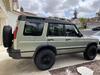
Seats look fine in the pics... the paint looks REAL fine judging just from the pictures. I'll be able to take a closer look on Sunday. Here it is:
That paint looks great. I have/had 17 so far. Here is my priority order:
1. Frame rust - behind rear wheels. If it is worse than surface rust you need to walk away unless you are or know a good welder.
2. Paint - Paint is expensive, everything else is cheap relative to paint.
3. Mileage - Mileage sets the resale value on these. At 110k you are at the low end of what these vehicles currently have. Your deal so far sounds excellent.
Everything else is replaced relatively cheaply if you can do the work, if you are paying someone else to do the work it can get expensive fast.
On the engine - take the coolant bottle cap off and get it warmed up - 15 to 20 minutes minimum. Look inside the bottle and see what it has for bubbles (sign of blown hg - $2000 or 12hs work). I would recommend bringing an OBD scanner with you. Elm327 from Amazon and the free torque app on Android are cheap and easy. Similar for Iphone. If it ticks when warm, that is not fatal but not easy or cheap to make go away.
Transmission - drive it, make sure it shifts ok and does not make any noises. As long as it is not chirping at low speeds the driveshaft is ok in the short term, but will need the joints replaced to be greasable, or just get a new shaft. Not super expensive either way.
Plan on doing the inline thermostat mod to keep it from blowing HG and the PCV mod to eliminate oil leaks.
Read the pre-purchase threads on the forums, lots of good info there.
Thanks a lot! Yeah, that seems pretty much in line with what I've read elsewhere on these forums. But thanks for putting it oh-so succinctly. Glad to hear my instinct about this being a good deal is not far off (so far!).
If you end up buying it, yes, replace the drive shaft with one that has zerk fittings (assuming it hasn't already been replaced). For ~$200 you can prevent a lot of damage should the original one come apart.
These trucks are easy to repair. Parts are readily available and relatively affordable. IF you do the work yourself they won't break the bank. Spend the cash for a good code reader and prepared to get your hands dirty.
There are a few basic checks you should perform. Bring a flashlight, wear clothes you don't mind getting a little dirty, and take your time to inspect and ask questions. Here are a few things that come to mind:
Under the hood:
Check the oil level. Make sure it's sufficient, looks like it's been changed recently/not neglected, and is NOT milky (indicating a coolant leak)
Check power steering fluid level and color (maintenance neglected?)
Check brake fluid level and color (maintenance neglected?)
Check the coolant reservoir level and color (maintenance neglected?)
Visually inspect wiring for wear and/or hack repair jobs
Visually inspect the valve covers and surrounding areas for leakage
Visually inspect (as much as is possible) the front and sides of the engine - you're looking for oil and coolant leaks
Visually inspect the radiator (are the fins in good shape, free from debris, no shotty repairs?)
Can you smell or see antifreeze? It has a distinct odor. Unless it was recently topped off and some spilled, or there is a leak, you shouldn't see (even small drips of green/yellow liquid) or smell antifreeze
Check the following for wear (These aren't deal breakers, but can help when negotiate the price and make sure you factor in fixing them sooner than later):
Serpentine belt
Spark plug wires
Hoses (radiator, etc.)
Vacuum lines
Battery (check purchase date stamp
Under the car - don't be afraid to shimmy under with your flashlight. Word of advice, wear safety glasses...these trucks tend to leak a lot.
Inspect for rust
Inspect under the engine for oil / fluid leaks
Inspect the transmission and transfer case for oil / fluid leaks (including coolant that leaked and dripped back)
Inspect rubber boots on CV joint, steering bar, etc. (are cracked/torn?)
Inspect everything for general conditions (i.e. anything bent, dented, damaged, missing, etc.)
Check the following for wear (same as #9 above)
Brake rotors / pads
Tires (remaining tread and age)
Inside the car
Make sure all windows open and close smoothly without any suspicious sounds
Make sure all sunroofs open and close smoothly without any suspicious sounds
Make sure all door locks open and close with both the switch and keyfob (these are especially difficult to replace)
Make sure all door handles (inside/outside) work
Make sure the seat heaters work
Make sure power seats operate in all directions
Make sure power mirrors work
Make sure the horn works
Inspect the headliner (notorious for sagging).
Pre-Test drive - First, open the hood and start the car
Listen for any ticking, squealing, grinding, or otherwise abnormal sounds
Wait for the engine to get to the temp where the RPMs drop down to a normal idle
Listen for any ticking, squealing, grinding, or otherwise abnormal sounds
Inspect for wobbling pulleys / anything out of alignment
Inspect for any leaks
Wait for the engine to reach normal operating temp (center of the temp gage inside the truck) <--this is especially important, mine has the infamous mystery tick after it's warm
Listen for any ticking, squealing, grinding, or otherwise abnormal sounds
Turn the wheels left and right, lock to lock, listen for whining / groaning from the power steering pump
Test Drive - drive at different speeds, and for long enough (20-30 mins) to get familiar with how the car accelerates, corners, stops, etc.
Drive at different speeds with the windows up and down
Listen for any whining, growning, etc. sounds when accelerating, decelerating, cornering, driving over speed bumps, etc.
Make sure the cruise control works
Make sure the vehicle accelerates and shifts smoothly
Post-Test drive - Leave the car running and open the hood
Listen for any ticking, squealing, grinding, or otherwise abnormal sounds
Inspect for any leaks
If you want to be extra thorough you can turn the car off and do a second inspection under the car (DANGER: everything is going to be HOT...obviously)
This is an amazing checklist. Thank you so much for the response. Will definitely research everything I don't know to make sure I can find it in the car hahah
I'll be sure to bump this thread with questions/conclusions once I go see the car.



 Buying 1999 DII, some newbie Q's