


Head gasket job Questions


Recovery Vehicle
Joined: Jun 2017
Posts: 1,238
Likes: 240
From: Alabama + Vegas + Texas

I have the LH manifold off and ported a little bit more. A Dremel just doesn’t have enough power I used a Makita die grinder and a porting kit from Summit, and a bit set off Amazon. In conjunction with the Cam the engine feels much better. The exhaust manifold ports are way too small.
OK, did you grind out both the iron exhaust manifold *and* the aluminum head exhaust side, or just 1?

TReK
Joined: Jul 2017
Posts: 3,387
Likes: 488
I still can't belive no one makes bolt-on shorty headers for a D2. And I know, just because I can't find them doesn't mean no one does.
I've seen links posted here this year for aluminum coolant and washer fluid tanks too...but can't find them anywhere searching on my own.
I'm sure enlarging the exhaust manifold ports to the same size or slightly larger than the head port is beneficial as well. I just really don't want to spend the time.
I've had good luck with carbide bits in my Dremel, and my engine is coming back out when I find time(just bell housing bolts and lift it out). So, maybe I'll try it.
I've seen links posted here this year for aluminum coolant and washer fluid tanks too...but can't find them anywhere searching on my own.
I'm sure enlarging the exhaust manifold ports to the same size or slightly larger than the head port is beneficial as well. I just really don't want to spend the time.
I've had good luck with carbide bits in my Dremel, and my engine is coming back out when I find time(just bell housing bolts and lift it out). So, maybe I'll try it.
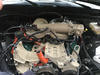

Things were going along and the lower bolthole for the Elbow Pipe stripped out. Waiting for a car to find a tool to drill it out. It's going to add a couple hours I am guessing.
I must have had some good karma. I found a longer bolt that torqued in just fine, Thank heavens.
I must have had some good karma. I found a longer bolt that torqued in just fine, Thank heavens.
Last edited by CollieRover; Sep 1, 2018 at 04:11 PM.

The hard part for me is getting my LH manifold back on. The cats section is not true, And I essentially seat it by torquing, not ideal.
Updates on what has been going on with reassembly.
Have your torque wrenches checked. Have your Valves seals changed, they come with the HG kit. You can also easily check for warpage your self.
Heads - Had a moment of panic, thanks for the support No doubt, and called ARP Tech support 3 times. Two washers slipped on the LH Head during the final torque to 80, I did 20 40 60 80 like No Doubt. #'s 2 and 5 I believe. 2 was a small slip not a big deal, 5 got me a bit concerned, and scared me. They both torqued to 80 lbf.ft, double checked(maybe a bad idea, but they are all on with a double click). The good thing about using Cometic gaskets is that you can retorque them, as long as you have not started the engine, so there was that option which I seriously considered. Speaking to a tech guy the next day who has done it for 20 years, he assured me that the torque on it will not be too severe and pull the threads under heat, or give him any concerns even being an Aluminum block. He said you do your best to avoid washers slipping but it is the real world, and it happens. He told me that I could reassemble, but that I would be wasting my time, and IMO could easily make a mistake, so with his asuurance that the torque is OK< and that he felt strongly that I was fine, and if he thought anything was wrong based on what I told him he would have be redo it. Can you tell I am a bit nervous this time around?
On the RH side I cleaned under the washer on the head more thoroughly, and gooped on the assembly lube more liberally. On that side one washer slipped slightly, but was fine. I used sequence 30 60 80 on that one which was recommended to me by ARP. So, I guess, really clean the head under the washers and use a good amuount of assembly lube. I used brushes to put the oil on the bottom of the studs, and the assembly lube on the top of the studs, top of the washers, and the bottom/inside of the nuts.
On the LH side I had to trim a tab off of the Cometic gasket with my Dremel, which added a level of complexity I didn't like, speaking to their Tech they said that blowing off the dust and wiping it was fine, and that you should just not scrape gouge the gasket etc. I spoke to their tech support and they said that is fine, or you can cut or bend the tab. On the RH side bending was adequate. I used the top stud in front as a guide on both sides and that helped seat the heads. Also, grab the heads by the exhaust and intake chambers to seat, not the front and back. ziptie everything out of your way. Use green painter's tape to cover up your intake chambers and the upper intake chambers during all assembly as well. Why chance it?
The RAVE calls for 28 lbf.ft for the exhaust manifolds in the cylinder head directions, but 40 lbf.ft in the torque section, so I am going to go to 40 lbf.ft today. That went fine. Have your manifolds installed on the pipe, and use a jack to lift them into position.
The Valley Pan gasket/Inlet Manifold gasket was a pain. I used the method of torqeing it in a bit, not completely prior to getting the silicone and permatex gasket sealer in place. That helped. Also, keep the clamps very very loose. I ended up climbing into the engine compartment and getting a knee onto the intake during installation to help it seat, monitoring the boltholes for gasket location. I am not sure what else I could have done frankly. It's in as good as I could get it. Maybe a genuine gakset would fit more easily? I don't know, I am sure that at some level the torquing of the upper inlet manifold is relied on to seat it. I manipulated it more that I like, but the ends caps stayed seated and the RTV looks good.
The last two time I have seated the upper inlet manifold it has been tipped forward. So this time I made extra sure that the wires, etc. were well clear. I made sure to rock it and seat it this time. I think probably the coil pack head held it up a little, so this time I got it clear and it seated flat as a pancake. Make sure to clean the lower intake boltholes, and use a little grease on the bolts. That helped torque down,one or two were being a little finicky, but grease solved it.
Also, the AB silicone for the spark plug boots is a really good idea.
Have your torque wrenches checked. Have your Valves seals changed, they come with the HG kit. You can also easily check for warpage your self.
Heads - Had a moment of panic, thanks for the support No doubt, and called ARP Tech support 3 times. Two washers slipped on the LH Head during the final torque to 80, I did 20 40 60 80 like No Doubt. #'s 2 and 5 I believe. 2 was a small slip not a big deal, 5 got me a bit concerned, and scared me. They both torqued to 80 lbf.ft, double checked(maybe a bad idea, but they are all on with a double click). The good thing about using Cometic gaskets is that you can retorque them, as long as you have not started the engine, so there was that option which I seriously considered. Speaking to a tech guy the next day who has done it for 20 years, he assured me that the torque on it will not be too severe and pull the threads under heat, or give him any concerns even being an Aluminum block. He said you do your best to avoid washers slipping but it is the real world, and it happens. He told me that I could reassemble, but that I would be wasting my time, and IMO could easily make a mistake, so with his asuurance that the torque is OK< and that he felt strongly that I was fine, and if he thought anything was wrong based on what I told him he would have be redo it. Can you tell I am a bit nervous this time around?
On the RH side I cleaned under the washer on the head more thoroughly, and gooped on the assembly lube more liberally. On that side one washer slipped slightly, but was fine. I used sequence 30 60 80 on that one which was recommended to me by ARP. So, I guess, really clean the head under the washers and use a good amuount of assembly lube. I used brushes to put the oil on the bottom of the studs, and the assembly lube on the top of the studs, top of the washers, and the bottom/inside of the nuts.
On the LH side I had to trim a tab off of the Cometic gasket with my Dremel, which added a level of complexity I didn't like, speaking to their Tech they said that blowing off the dust and wiping it was fine, and that you should just not scrape gouge the gasket etc. I spoke to their tech support and they said that is fine, or you can cut or bend the tab. On the RH side bending was adequate. I used the top stud in front as a guide on both sides and that helped seat the heads. Also, grab the heads by the exhaust and intake chambers to seat, not the front and back. ziptie everything out of your way. Use green painter's tape to cover up your intake chambers and the upper intake chambers during all assembly as well. Why chance it?
The RAVE calls for 28 lbf.ft for the exhaust manifolds in the cylinder head directions, but 40 lbf.ft in the torque section, so I am going to go to 40 lbf.ft today. That went fine. Have your manifolds installed on the pipe, and use a jack to lift them into position.
The Valley Pan gasket/Inlet Manifold gasket was a pain. I used the method of torqeing it in a bit, not completely prior to getting the silicone and permatex gasket sealer in place. That helped. Also, keep the clamps very very loose. I ended up climbing into the engine compartment and getting a knee onto the intake during installation to help it seat, monitoring the boltholes for gasket location. I am not sure what else I could have done frankly. It's in as good as I could get it. Maybe a genuine gakset would fit more easily? I don't know, I am sure that at some level the torquing of the upper inlet manifold is relied on to seat it. I manipulated it more that I like, but the ends caps stayed seated and the RTV looks good.
The last two time I have seated the upper inlet manifold it has been tipped forward. So this time I made extra sure that the wires, etc. were well clear. I made sure to rock it and seat it this time. I think probably the coil pack head held it up a little, so this time I got it clear and it seated flat as a pancake. Make sure to clean the lower intake boltholes, and use a little grease on the bolts. That helped torque down,one or two were being a little finicky, but grease solved it.
Also, the AB silicone for the spark plug boots is a really good idea.
It really depends on the y pipe. I had the cheap exhaust place put my Y Pipes in and there is no way I could drop the manifolds connected to the heads in. The fact is you do not have to take the manifolds out at all. My rh side stayed on the Y Pipe, just positioned out of the way. So, I don't know. Hopefully, you can. Do you have a helper to help postion the head and Y Pipe with you?

