


Is premium fuel essential? Also ? about power seats


Thread Starter
|
Mudding
Joined: Feb 2014
Posts: 102
Likes: 2
From: Colorado Springs, CO
 Is premium fuel essential? Also ? about power seats
Sorry folks for combining two questions into one post. The first (gas question) was such an easy one, I couldn't leave it at that!
As the title suggests, is premium fuel necessary? If so, why? It's not as though this is some high strung, high compression marvel of engineering. It's a 1960's pushrod V8 made of aluminum, outfitted with fuel injection and modern electronics. I've owned plenty of vehicles with a legitimate premium fuel requirement, but all were forced induction, so I paid to play. I just can't see what I'm paying premium for, most mid-size 12 valve V6's make comparable horsepower. Please educate me, there must be something I'm missing.
Second question, my passenger power seat won't move forward & backward. I've replaced all the fuses, everything works but that. Also, there are three fuses underneath each seat. Someone told me to use 30A fuses, but I just cannot see installing 90 amps worth of fusing per side. Are these fuse blocks wired in parallel, such that I could install three 10A fuses (or one 30A) per side? That would make a lot more sense. I'm certain fitting 90A worth of fusing per side, the wiring would melt and light fire long before the fuses would blow... Any info on this would be helpful!
As the title suggests, is premium fuel necessary? If so, why? It's not as though this is some high strung, high compression marvel of engineering. It's a 1960's pushrod V8 made of aluminum, outfitted with fuel injection and modern electronics. I've owned plenty of vehicles with a legitimate premium fuel requirement, but all were forced induction, so I paid to play. I just can't see what I'm paying premium for, most mid-size 12 valve V6's make comparable horsepower. Please educate me, there must be something I'm missing.
Second question, my passenger power seat won't move forward & backward. I've replaced all the fuses, everything works but that. Also, there are three fuses underneath each seat. Someone told me to use 30A fuses, but I just cannot see installing 90 amps worth of fusing per side. Are these fuse blocks wired in parallel, such that I could install three 10A fuses (or one 30A) per side? That would make a lot more sense. I'm certain fitting 90A worth of fusing per side, the wiring would melt and light fire long before the fuses would blow... Any info on this would be helpful!


Regarding the seat...Are the fuses blown? If I recall correctly there is a relay under the seat as well. It can fall from its clip and catch on the track and unplug itself when moving the seat around.

Recovery Vehicle
Joined: Jan 2012
Posts: 1,064
Likes: 16
From: San Antonio,Tx
If you have checked all of the fuses and relays then next I would check the motor under the seat to make sure it has power when you push the switch. If the plug for the motor shows power when you press the switch to move the seat, and the motor doesn't work when you plug it back in, then you have a bad motor.
If the plug doesn't show power when you move the seat switch then you have a bad switch.
Switch Seat - Right Hand (Genuine Part # YUB101080) - Land Rover switches/control unit/actuators from Atlantic British
As of the Fuel question.
The best way I can answer is like this- These engines and computers were designed to run with the High-Octane fuel. The computer will slightly adjusted the timing (due to preignition) when low-octane fuel is present, the car's performance and fuel efficiency is diminished slightly. Preignition is what causes engine knock. The knock sensor on your engine will detect this knock and adjust the timing to try and improve this. If you engine is having to adjust the timing due to your low-octane fuel, then it is not running at it's full potential.
So, can you run on regular gas? Sure. You might not get the best MPG and performance that you would with the correct octane.
If the plug doesn't show power when you move the seat switch then you have a bad switch.
Switch Seat - Right Hand (Genuine Part # YUB101080) - Land Rover switches/control unit/actuators from Atlantic British
As of the Fuel question.
The best way I can answer is like this- These engines and computers were designed to run with the High-Octane fuel. The computer will slightly adjusted the timing (due to preignition) when low-octane fuel is present, the car's performance and fuel efficiency is diminished slightly. Preignition is what causes engine knock. The knock sensor on your engine will detect this knock and adjust the timing to try and improve this. If you engine is having to adjust the timing due to your low-octane fuel, then it is not running at it's full potential.
So, can you run on regular gas? Sure. You might not get the best MPG and performance that you would with the correct octane.
Last edited by Jared9220; Feb 16, 2014 at 08:41 AM.

Recovery Vehicle
Joined: Nov 2013
Posts: 798
Likes: 3
From: Las Vegas Nevada
If you run on regular gas you'll find that your fuel rail will be filled with crap soon enough. Not sure why, but it does it. It's also like 5$ more a tank of gas to run premium, it's not a lot extra.

Pro Wrench
Joined: Dec 2012
Posts: 1,364
Likes: 31
From: Placerville, CA USA
My Personal Opinion, and that's all it is, NO. I've been running 87 Octane since I bought my DII with no issues whatsoever. No knock, no lack of power, currently 14.1 MPG.
I would use the recommended Fuse sizes on ALL fuses in any vehicle. If they keep blowing, there's an issue that needs to be resolved. According to RAVE, 30 AMPS is UNDER rated for the Motor. It needs a 40 for motor and two 3's for the Lumbar Pump.
No, not parallel. Each 30 AMP circuit is separate. So, they don't equal 90 AMPS.
Recommended Fuses:
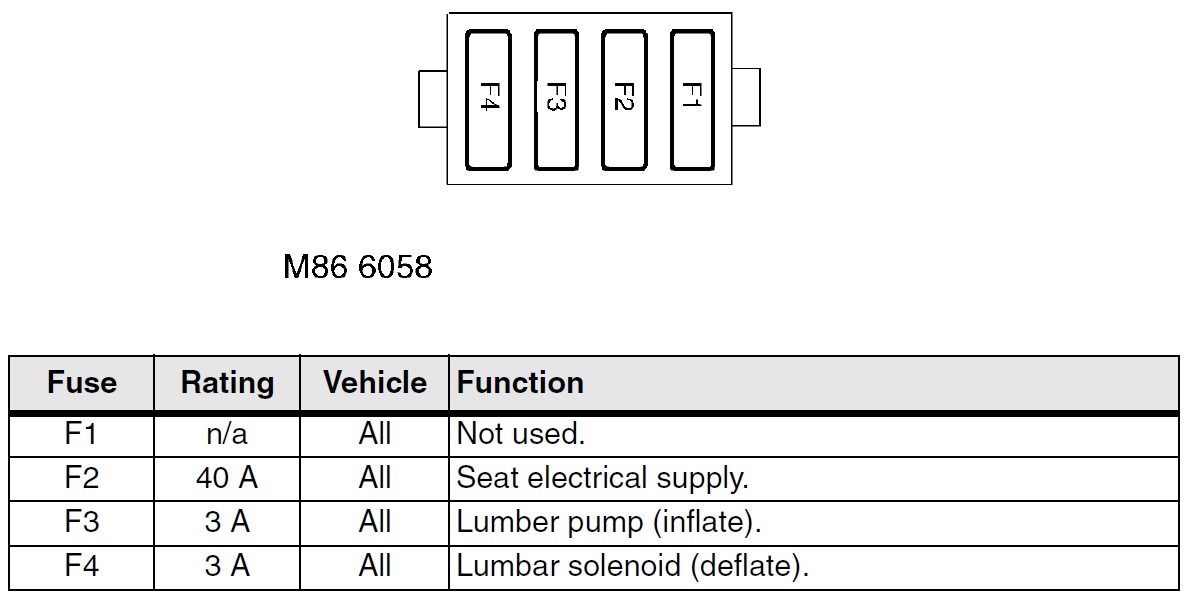
Someone told me to use 30A fuses, but I just cannot see installing 90 amps worth of fusing per side. Are these fuse blocks wired in parallel, such that I could install three 10A fuses (or one 30A) per side? That would make a lot more sense. I'm certain fitting 90A worth of fusing per side, the wiring would melt and light fire long before the fuses would blow... Any info on this would be helpful!
No, not parallel. Each 30 AMP circuit is separate. So, they don't equal 90 AMPS.
Recommended Fuses:

Winching
Joined: Nov 2007
Posts: 538
Likes: 9
From: Houston, Texas
The fuel issue has been covered countless times. I would suggest searching the topic instead of asking everyone all over again. IMHO you assume the risk of problems later on by not using it and the cost of premium is less than an engine rebuild later on. I just filled up with Shell premium for $3.42 and regular was $3.09 so it wasn't that much more.

Rock Crawling
Joined: Mar 2013
Posts: 452
Likes: 26
From: Oregon, north of Salem
"My Personal Opinion, and that's all it is, NO. I've been running 87 Octane since I bought my DII with no issues whatsoever. No knock, no lack of power, currently 14.1 MPG."
________________________
I have had same experience. When I first got my 2004, 4.6 Litre Rover, put in 87 octane cheapest fuel available here, I got some audible pinging, but engine computer soon, automatically, corrected itslelf, and I have heard no pinging since (and I listen carefully for it). Some guys would have us believe a wide variety of scary things will happen to Rover engine run on cheapo fuels, the ones not recommended in the Rover manual; they may be correct, so I am still waiting; judging---time will tell, & I am willing to wait and see. I am sure that my performance isn't what it would be on the more expensive fuel, but my performance is just fine; I am satisfied with it for now. I might sing a different tune, if I had to climb up really steep grades daily, or some such thing, where more performance would be desirable. Previously, I had a Rover 3500 car; same engine, but in 3.5 Litre, and after that, a Classic Range Rover, same engine, but in 3.9 litre. Put well over 150,000 to 200,000 on each of them, using cheapo gas always, no problem---no engine disaster as some guys want you to believe.
________________________
I have had same experience. When I first got my 2004, 4.6 Litre Rover, put in 87 octane cheapest fuel available here, I got some audible pinging, but engine computer soon, automatically, corrected itslelf, and I have heard no pinging since (and I listen carefully for it). Some guys would have us believe a wide variety of scary things will happen to Rover engine run on cheapo fuels, the ones not recommended in the Rover manual; they may be correct, so I am still waiting; judging---time will tell, & I am willing to wait and see. I am sure that my performance isn't what it would be on the more expensive fuel, but my performance is just fine; I am satisfied with it for now. I might sing a different tune, if I had to climb up really steep grades daily, or some such thing, where more performance would be desirable. Previously, I had a Rover 3500 car; same engine, but in 3.5 Litre, and after that, a Classic Range Rover, same engine, but in 3.9 litre. Put well over 150,000 to 200,000 on each of them, using cheapo gas always, no problem---no engine disaster as some guys want you to believe.

Recovery Vehicle
Joined: Sep 2012
Posts: 1,169
Likes: 52
From: Tampa, FL
I will add to the fuel debate that I ran 4 tanks of 87, and while my truck seemed to run the same, my mileage dropped almost 2 MPG.
So, I am now running Premium again to see if the mileage goes back up to the 15+ MPG I was getting. If it does go back up, I'm gonna do a cost analysis to see if it's worth the mpg loss to pay a bit less for gas.
So, I am now running Premium again to see if the mileage goes back up to the 15+ MPG I was getting. If it does go back up, I'm gonna do a cost analysis to see if it's worth the mpg loss to pay a bit less for gas.

TReK
Joined: Nov 2011
Posts: 2,748
Likes: 506
From: Seattle, Wa
Run enough cheapo gas and it will take several tanks of top tier premium to tell any difference, which may be why some folks can't tell.
I ran cheapo premium gas until my mechanic showed me the crud in the fuel rail when I started having injector issues.
Now that I run top tier premium all the time I can tell in one tank when inferior gas is in it, which by the way is always the same brand top tier chevron supreme but from a different station. Either some stations don't have premium in their premium, or the difference in ethanol varies from station to station. I can tell by slightly lower power, noisier revs, and lower mpg.
I have found a few consistent stations and now use them exclusively.
I have not had a single injector issue since.
Clearly YMMV.
I ran cheapo premium gas until my mechanic showed me the crud in the fuel rail when I started having injector issues.
Now that I run top tier premium all the time I can tell in one tank when inferior gas is in it, which by the way is always the same brand top tier chevron supreme but from a different station. Either some stations don't have premium in their premium, or the difference in ethanol varies from station to station. I can tell by slightly lower power, noisier revs, and lower mpg.
I have found a few consistent stations and now use them exclusively.
I have not had a single injector issue since.
Clearly YMMV.