


Off-roading advice please!!


Thread Starter
|
Rock Crawling
Joined: Jun 2024
Posts: 340
Likes: 205
From: Queensland
 Off-roading advice please!!
Hello all!
In this thread I am seeking out some advice for what to bring off-roading in a Defender. Firstly, let me explain what I’ve got:
In this thread I am seeking out some advice for what to bring off-roading in a Defender. Firstly, let me explain what I’ve got:
- 20” w/ GY AT tires
- Front tow hoop exposed, two rear tow hoops
- TJM tow hitch receiver shackle
- Two different tow ropes, one of which can be knotted easily around the factory tow hoops
- Two (extremely cheap) recovery boards
- Factory jack
Last edited by A1C6; Apr 29, 2025 at 10:10 PM.

Given your kit, which is a good starting point - the most important thing you could bring with you is a buddy in his or her own rig. There's nothing like having someone in front or behind you on the trail to help pull you out of a situation that you can't get out of.
As for kit- pickup a tire plug/patch repair kit. Make sure to get one that has replacement valve stems.
A couple soft shackles and hard shackles that are properly weight rated for the Defendah.
Radio (not sure what is standard down under as far as GMRS or CB or whatever...)
Some way to contact the outside world if you're not in cell coverage area - over here we have these things called Garmin inTouch which are satellite based communication devices.
Basic tool kit with ratchets, wrenches, screwdrivers, pliers and a breaker bar.
Shovel or spade.
Depending on the type of trails, I find a chainsaw helps quite a bit.
When you decide to get a winch then you are in the realm of self-recovery, and don't necessarily NEED another vehicle with you - but it always helps. Then you can pickup some kits from places like Yankum ropes which have things like soft shackles, tree straps, winch line extensions and ****** blocks all included (at a hefty price).
The most important thing to do however - if you haven't done it already - is go to an offroad recovery training session. Over here there are outfits that do multi-day seminars where you'll actually use your vehicle in a setup course and perform recoveries using various techniques. They'll teach you how to do it safely and effectively for most scenarios.
As for kit- pickup a tire plug/patch repair kit. Make sure to get one that has replacement valve stems.
A couple soft shackles and hard shackles that are properly weight rated for the Defendah.
Radio (not sure what is standard down under as far as GMRS or CB or whatever...)
Some way to contact the outside world if you're not in cell coverage area - over here we have these things called Garmin inTouch which are satellite based communication devices.
Basic tool kit with ratchets, wrenches, screwdrivers, pliers and a breaker bar.
Shovel or spade.
Depending on the type of trails, I find a chainsaw helps quite a bit.
When you decide to get a winch then you are in the realm of self-recovery, and don't necessarily NEED another vehicle with you - but it always helps. Then you can pickup some kits from places like Yankum ropes which have things like soft shackles, tree straps, winch line extensions and ****** blocks all included (at a hefty price).
The most important thing to do however - if you haven't done it already - is go to an offroad recovery training session. Over here there are outfits that do multi-day seminars where you'll actually use your vehicle in a setup course and perform recoveries using various techniques. They'll teach you how to do it safely and effectively for most scenarios.


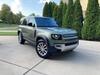
As @H1Tad mentioned, you're off to a good start. MaxTrax are good to have. Even though you say yours are cheap, they're a hell of a lot better than nothing! In addition to everything he mentioned, I'd also make sure you have an air compressor, water and a bit of food just in case. Also, assuming you're on the Goodyear Wrangler Adventure tires and not the Duratracs, I'd seriously consider upgrading to a proper all-terrain tire if you go off-roading even on a somewhat regular basis, i.e., 5+ times a year. I know people complain about the lack of sidewall on the 20" wheel, but I haven't had any issues on my 20" wheels whatsoever. The 20" wheels have more than enough sidewall, but the OEM Wrangler Adventures don't have an extra layer of Kevlar in the sidewall, because JLR wanted to save weight. I'm running Falken Wildpeak AT3Ws, which have been a great tire the past two years. Relatively quiet on the road, excellent dirt and mud performance, and decent snow performance (although that last one is probably meaningless to you).
Some people like to air down, especially with 18" wheels. There are people on here that air down on 20" wheels, too. Nothing wrong with that, but at the LR Experience Centers I've been to (Asheville, NC and at the factory in Solihull) they don't recommend airing down on these lower profile tires compared to the 18" or what was found on old Defenders. I personally have never aired down when I off-road, and I haven't had a problem. That being said, I don't go in the dunes, or sand, or rock crawling, as I don't live anywhere close enough to do any of that. On sand, especially fine-grained sand, you should always air down. Always make sure of your surroundings. Try to avoid big obstacles such as large sharp rocks, tree stumps, and branches. Always be aware of what you're driving over and be conscious of the lowest points on the undercarriage, which are the lower control arms. Ground clearance shouldn't be much of an issue whether you're on coils or air. Air gives an advantage, but coils still have plenty of clearance, the main issue with the coils is that you lose out on suspension articulation.
Also, one of the most important tools you have is the Terrain Response system. It makes off-roading easy. Depending on trim level you might have Terrain Response 2. If you do, I wouldn't use it. It works brilliantly, but it is a reactive system. Even though it takes only about 5-10 feet of driving for TR2 to analyze the terrain and adjust accordingly, manually choosing the most appropriate setting for what you're driving over is proactive, and the car will be properly set up for what you're driving over. And having the differential(s), traction control, throttle response, ABS etc. pre-loaded could make the difference between smooth sailing and something going very wrong.
Overall, you're off to a good start, and as long as you're not going anywhere super remote, and if you bring a friend along, I think you'll be just fine. Have a great time, the Defender will not disappoint!
Some people like to air down, especially with 18" wheels. There are people on here that air down on 20" wheels, too. Nothing wrong with that, but at the LR Experience Centers I've been to (Asheville, NC and at the factory in Solihull) they don't recommend airing down on these lower profile tires compared to the 18" or what was found on old Defenders. I personally have never aired down when I off-road, and I haven't had a problem. That being said, I don't go in the dunes, or sand, or rock crawling, as I don't live anywhere close enough to do any of that. On sand, especially fine-grained sand, you should always air down. Always make sure of your surroundings. Try to avoid big obstacles such as large sharp rocks, tree stumps, and branches. Always be aware of what you're driving over and be conscious of the lowest points on the undercarriage, which are the lower control arms. Ground clearance shouldn't be much of an issue whether you're on coils or air. Air gives an advantage, but coils still have plenty of clearance, the main issue with the coils is that you lose out on suspension articulation.
Also, one of the most important tools you have is the Terrain Response system. It makes off-roading easy. Depending on trim level you might have Terrain Response 2. If you do, I wouldn't use it. It works brilliantly, but it is a reactive system. Even though it takes only about 5-10 feet of driving for TR2 to analyze the terrain and adjust accordingly, manually choosing the most appropriate setting for what you're driving over is proactive, and the car will be properly set up for what you're driving over. And having the differential(s), traction control, throttle response, ABS etc. pre-loaded could make the difference between smooth sailing and something going very wrong.
Overall, you're off to a good start, and as long as you're not going anywhere super remote, and if you bring a friend along, I think you'll be just fine. Have a great time, the Defender will not disappoint!


Mudding
Joined: May 2022
Posts: 208
Likes: 226
From: Colorado
A great question and one which can generate more answers than “Carter Has Little Liver Pills” as we used to say :-) In my experience - what gear - how much - and knowledge base to safely use it - all form the structure of a well balanced tripod for my comfortable off-roading be it hours, days or weeks.
Apologies in advance if this is perceived as ‘preaching’ or other wise negative - that is NOT my intent. I’m simply offering my own “two bits” worth of info. Below is my ordered list of what I believe is Most to Least “important” (but it's all important depending on circumstance):
1. Training:
Nothing beats local professional training with your rig in your conditions. I draw a distinction between training and experience.
First hand training is king: how to test/use the LRD features, what trail driving line to choose, speeds, stuck assessments, etc. Best thing I ever did many years ago was get professional training from an acknowledged off-road expert despite having had some ‘farm training’ from respected friends and family. Driving line selection, trail speeds, etc., can help mitigate potential issues with tires, gear, or conditions. Such training typically includes gear assessments - what - why - how to use it, which I found particularly useful in starting to build my own kit. I’ve found Ronnie Dahl’s AUS content on gear and techniques well informed and well presented: https://www.youtube.com/@Ronny_Dahl It can take some digging there to find gear reviews and techniques but I find it worth the time.
That reminds me - I need to get some additional training pulling my trailer off-road and I still need to make a better effort to get LRD specific training from their professional trainers. Knowledge is Power.
2. Getting Unstuck ‘Kit’:
After quality training I consider good kit the cheapest insurance I can carry. Even simply having the gear can be helpful if someone comes along - a ****** strap and shackles for example to connect to a good Samaritan’s vehicle can get me unstuck. What I consider basic kit in my order of priority is below. I list a vehicle mounted winch as last. Oddly not because I don’t think it’s preferred (and I want one!) but because there are options I believe are more important, economical, and easier to use.
A) every time all the time:
These bits can all be used together to address a lot of extraction situations:
C) optional additional bits
Some folks may place this as #1 but I'm considering this in the context of the almost any tire on a shipping LRD, or for example my wife's Porsche Macan factory tires, can get one in and out of a LOT of places off-road. So I've bumped it to #3.
Tyres are always subjective to a strong degree and related to most common use for the rig. Airing down (and back up) as needed can help address some tire issues and should be done regardless of tire (subject to debate - not intended to start one). I ordered my 110x with 19” wheels as I wanted more sidewall than what was provided on their 20" wheels and 19" was the only choice. My preference was for 18” wheels MAX when ordering but that wasn’t possible from JLR on the 110x. I found the factory supplied GY Adventures unacceptable and ordered the rig with at least GY Duratrac’s. That was 2022 - these days DuraTrac Kevlars seem better. I chose to switch to 18” wheels (better tire choices from various vendors) and BFGoodrich KO3 skins. Individual use case from how often you wheel, where and what conditions (e.g. rock, mud, sand), towing, etc. will heavily dictate that choice. ‘Better Tyres’ is always a great debate.
4. Traction Board quality
The original post mentioned traction boards and having a concern over the quality of the ones currently owned. I believe any traction board brand is better than NO boards. If they serve their purpose and get you out of a bind, then need to be replaced - they’re ‘fine’ as you’re unstuck. MaxTrax appear to be the AUS (and global) big name but I don’t now what other options exist locally in AUS. Sadly, budget is always a consideration ;-( In my experience 75% of something is better than 100% of nothing in that context. If my existing traction boards are serviceable and the $'s for new ones can be spend on related kit as described previously to get me out of a potential pickle - I'd seriously look at that option. Replacing your traction boards may still be the best investment but it's worth taking a hard look at.
Apologies again for the long post but the question is well worth taking a deep dive into. There’s a lot ways to skin the cat when asking you’re important question.
Cheers
Huc
Apologies in advance if this is perceived as ‘preaching’ or other wise negative - that is NOT my intent. I’m simply offering my own “two bits” worth of info. Below is my ordered list of what I believe is Most to Least “important” (but it's all important depending on circumstance):
1. Training:
Nothing beats local professional training with your rig in your conditions. I draw a distinction between training and experience.
First hand training is king: how to test/use the LRD features, what trail driving line to choose, speeds, stuck assessments, etc. Best thing I ever did many years ago was get professional training from an acknowledged off-road expert despite having had some ‘farm training’ from respected friends and family. Driving line selection, trail speeds, etc., can help mitigate potential issues with tires, gear, or conditions. Such training typically includes gear assessments - what - why - how to use it, which I found particularly useful in starting to build my own kit. I’ve found Ronnie Dahl’s AUS content on gear and techniques well informed and well presented: https://www.youtube.com/@Ronny_Dahl It can take some digging there to find gear reviews and techniques but I find it worth the time.
That reminds me - I need to get some additional training pulling my trailer off-road and I still need to make a better effort to get LRD specific training from their professional trainers. Knowledge is Power.
2. Getting Unstuck ‘Kit’:
After quality training I consider good kit the cheapest insurance I can carry. Even simply having the gear can be helpful if someone comes along - a ****** strap and shackles for example to connect to a good Samaritan’s vehicle can get me unstuck. What I consider basic kit in my order of priority is below. I list a vehicle mounted winch as last. Oddly not because I don’t think it’s preferred (and I want one!) but because there are options I believe are more important, economical, and easier to use.
A) every time all the time:
- shovel and gloves (add an axe, hand saw or power saw if tree debris is a possibility)
- traction boards x4 ‘cos I have a 4WD with 4 tires. I also carry 2 on my trailer. Bridging, digging, traction, linked together making a trail, all viable uses of the tool. They also make great bases for bottle or scissor jacks, particularly in soft conditions.
- tire repair kit. I had ARB’s kit for ages (still do and carry that in my trailer) but have also added the GlueTread Expedition kit to my 110x: https://www.gluetread.com
- air inflation system. I prefer my PowerTank CO2 system. I carried a portable compressor prior to that. I have the LRD air compressor installed but don’t fully trust it as it’s failed me twice. So stick with trusting my CO2.
- communication tools: cell phone - satellite phone - inReach - Starlink Mobile - Spot system, whatever means one can rely upon to make a call for general assistance or emergency.
- hand held GMRS two way radio’s to chat with my driving partner or good Samaritan assisting in my extraction and as trail com’s in a group adventure.
These bits can all be used together to address a lot of extraction situations:
- tree strap (x2 is better and I need an extra one)
- * kinetic rope or ****** strap: dynamic extraction lines increase energy to get unstuck
- * synthetic winch line (two lengths 20ft/6m and 30ft/9m)
- * screw pin bow shackles (Crosby hard shackle) and soft shackles. Assorted number of each assembled over time. Soft shackles are awesome and preferred. Hard shackles are still part of the kit as they can be used for fitting the hi-lift jack or on hard edge connection points than can mess up a soft shackle.
- * hitch pin(s)/tow pin without a lock for ease of use. I also have a few locking ones I use on my trailer hitch that can be used if necessary.
- * a pulley ‘cos it’s hard to beat mechanical advantage :-D (see (C) below)
- Hy-lift jack with assorted attachments. I have the longest one they make as I can (and have) used it as a winch. I’d never use it to jack and change a tire but can lift the LRD from the wheel/rim to get a traction board under as an example.
- bottle jack with an assortment of attachments. I carry this one ( https://safejacks.com ) and keep it with the trailer and put in LRD when heading out for the day on camping trips, Assorted extensions and adaptors they provide to lift from pinch welds to rock rails (if you have them) etc.. In general I’d prefer to use a bottle jack over the LRD factory scissor jack but that's personal preference.
C) optional additional bits
- tire deflator valves for airing down (e.g. Staun) and/or multi-point hose inflation system bridals for airing up
- tow hitch receiver shackle. I used to consider this required but I say optional now as most LRD’s have two rated extraction rings on the rear. I still carry my old one as it was on my (A) list above before I had the LRD
- tow strap ‘cos I might get stranded. I also have one for my Triumph Tiger motorcycles as I got stranded once and it was a LONG LONG wait for assistance once I finally nursed her back off the trail :-( My buddy could have towed me out from the trails in relative comfort.
- X-Lock https://www.asroffroad.com/safe-xtract-x-locks/
- rope retention pulley as a supplement or replacement to pulley noted in (B). These things are lighter and easier to handle but don't work with wire rope
- additional short straps, misc items like a fast fid ('cos you never know when you need just a little more reach or you gotta fix a synthetic rope )
- winch with synthetic winch line. Yah I’d love one but $’s is always an issue and my 110x serves various other purposes aside from overloading. If I had my druthers I'd have bought it when I ordered the 110x but sadly budget is always a reality :-(
Some folks may place this as #1 but I'm considering this in the context of the almost any tire on a shipping LRD, or for example my wife's Porsche Macan factory tires, can get one in and out of a LOT of places off-road. So I've bumped it to #3.
Tyres are always subjective to a strong degree and related to most common use for the rig. Airing down (and back up) as needed can help address some tire issues and should be done regardless of tire (subject to debate - not intended to start one). I ordered my 110x with 19” wheels as I wanted more sidewall than what was provided on their 20" wheels and 19" was the only choice. My preference was for 18” wheels MAX when ordering but that wasn’t possible from JLR on the 110x. I found the factory supplied GY Adventures unacceptable and ordered the rig with at least GY Duratrac’s. That was 2022 - these days DuraTrac Kevlars seem better. I chose to switch to 18” wheels (better tire choices from various vendors) and BFGoodrich KO3 skins. Individual use case from how often you wheel, where and what conditions (e.g. rock, mud, sand), towing, etc. will heavily dictate that choice. ‘Better Tyres’ is always a great debate.
4. Traction Board quality
The original post mentioned traction boards and having a concern over the quality of the ones currently owned. I believe any traction board brand is better than NO boards. If they serve their purpose and get you out of a bind, then need to be replaced - they’re ‘fine’ as you’re unstuck. MaxTrax appear to be the AUS (and global) big name but I don’t now what other options exist locally in AUS. Sadly, budget is always a consideration ;-( In my experience 75% of something is better than 100% of nothing in that context. If my existing traction boards are serviceable and the $'s for new ones can be spend on related kit as described previously to get me out of a potential pickle - I'd seriously look at that option. Replacing your traction boards may still be the best investment but it's worth taking a hard look at.
Apologies again for the long post but the question is well worth taking a deep dive into. There’s a lot ways to skin the cat when asking you’re important question.
Cheers
Huc
Last edited by Huc; Apr 29, 2025 at 04:07 PM. Reason: typos and punctuation


Thread Starter
|
Rock Crawling
Joined: Jun 2024
Posts: 340
Likes: 205
From: Queensland
Okay - that’s a lot of info to digest. I’ll do some research into some of the things you’ve said and I’ll reply to each of your posts individually. However, I would like to say that the driver (which isn’t me ) has done several offroading training sessions when he worked in the car industry. Not necessarily as focused as the Defender, in cars like the first gen Cayenne (surprisingly good) and ML as well as Foresters and BT-50’s (Mazda pickup) ~ however no recovery courses afaik.
Finally, thanks all for your advice
Finally, thanks all for your advice
Last edited by A1C6; Apr 30, 2025 at 01:40 AM.

Overlanding
Joined: Mar 2024
Posts: 15
Likes: 32
Okay - that’s a lot of info to digest. I’ll do some research into some of the things you’ve said and I’ll reply to each of your posts individually. However, I would like to say that the driver (which isn’t me ) has done several offroading training sessions when he worked in the car industry. Not necessarily as focused as the Defender, in cars like the first gen Cayenne (surprisingly good) and ML as well as Foresters and BT-50’s (Mazda pickup) ~ however no recovery courses afaik.
Lots of great tips in this thread. We try and have a buddy for help when possible. Personal view on airing down - I always spec 18” wheels on my 4x4’s so I can air down for sand (~15psi) corrugations (~minus 20psi on tyre pressure placard) I don’t rock crawl or mud dive so don’t have a view. I would definitely air down to what the safe rated psi is for 20’s. I also have a 3m bridle strap (tree saver works as well) that I use between the two rear recovery points when required to distribute load from a ****** recovery.
Basic auto tool kit as detailed above, air compressor, tarp. RACQ ultimate cover.
I also apply anti seize to the wheel lugs as I got caught first time on mt Mee and could lot break the nuts free on my first discovery.
I use a spare wheel mounting platform for my shovel and the Maxtrax spare wheel mounting straps.
I always have a UHF & Garmin in reach comms with us if we need to get help.
the above is based on our SEQ/out west trips. We use a 4x4 sprinter for our Outback touring (Cape & Litchfield this winter) but have a lot more kit with us including Starlink.
Cheers
Sprinter 4x4 (16” wheels) camping rig at Porcupine Gorge FNQ (highly recommended) before I had 2 rated front recovery points installed


pic of shovel mount (not pictured: ratchet strap goes around Tyre)
Last edited by MiltonMan; Apr 29, 2025 at 07:50 PM.


TReK
Joined: Oct 2007
Posts: 2,785
Likes: 1,993
From: Whidbey Island, PNW
Yes to everything here above -- although I didn’t read it all as I’m work and this is far more interesting of a topic than whatever my clients are beating on about.
1) Don’t go alone as a beginner
2) Hit the weak point of the car: Tires. Get better tires than the factory AT’s. Sorry to say. I tried to use them for a year and after one offroad trip where I got stuck 3 times, popped a tire and debeaded a tire on an easy LR club run which was embarrassing, then I got new tires the day. 18’s or 20 wheels does not matter for whatever you’re doing at your experience level on this car. Get KO2’s or Wildpeaks. The good ones. That will get you going. This is worth the $1600-$1800 - $2000. Get 5, not 4, btw. You need a matching spare. Just know, you can offroad in the optional AT’s but eventually you will have a problem !
3) Get a full sized shovel (not some stupid small overlander dumbass shovel) & traction boards (you have them, that’s fine - Cheap traction boards are fine but just know you’ll break them if you use them. Just buy new ones then), and you need a way to air down and up your tires with a hose that is not going to melt at its attachment point after 10 mins of use. I air down to 20 on my tires and it’s fine. I go lower in snow.
4) Get 3 soft shackles that are good quality (not amazon unknown) and 2 good ropes (not amazon unknown quality). Sounds like you’re covered here.
5) Get a Midland GMRS radio. Better yet get a set of 2 radios. I repeat. Get a radio. Don’t be the one borrowing someone else’s radio.
6) Emergency stuff: 1) A Hand saw you can cut a small tree with. 2) First Aid Kit. 3) Fire extinguisher. Don’t be daft. You may need this stuff when you cut your finger off sawing down the tree blocking the trail and then set the woods on fire while idling while parked cutting down the tree with the bleeding finger.
There are a million other things on my checklist. But the above is -- I think -- the basics to go in the woods.
Then... Get out there and throttle the thing.
Also -- might as well now get your head around the fact that your pretty Defender wheels are going to be scuffed up. Part of the game. My wheels are the only part of my Defender I’ve consistently and permanently damaged offroading. They are a sacrifice for the fun. Mine are comically trashed.
1) Don’t go alone as a beginner
2) Hit the weak point of the car: Tires. Get better tires than the factory AT’s. Sorry to say. I tried to use them for a year and after one offroad trip where I got stuck 3 times, popped a tire and debeaded a tire on an easy LR club run which was embarrassing, then I got new tires the day. 18’s or 20 wheels does not matter for whatever you’re doing at your experience level on this car. Get KO2’s or Wildpeaks. The good ones. That will get you going. This is worth the $1600-$1800 - $2000. Get 5, not 4, btw. You need a matching spare. Just know, you can offroad in the optional AT’s but eventually you will have a problem !
3) Get a full sized shovel (not some stupid small overlander dumbass shovel) & traction boards (you have them, that’s fine - Cheap traction boards are fine but just know you’ll break them if you use them. Just buy new ones then), and you need a way to air down and up your tires with a hose that is not going to melt at its attachment point after 10 mins of use. I air down to 20 on my tires and it’s fine. I go lower in snow.
4) Get 3 soft shackles that are good quality (not amazon unknown) and 2 good ropes (not amazon unknown quality). Sounds like you’re covered here.
5) Get a Midland GMRS radio. Better yet get a set of 2 radios. I repeat. Get a radio. Don’t be the one borrowing someone else’s radio.
6) Emergency stuff: 1) A Hand saw you can cut a small tree with. 2) First Aid Kit. 3) Fire extinguisher. Don’t be daft. You may need this stuff when you cut your finger off sawing down the tree blocking the trail and then set the woods on fire while idling while parked cutting down the tree with the bleeding finger.
There are a million other things on my checklist. But the above is -- I think -- the basics to go in the woods.
Then... Get out there and throttle the thing.
Also -- might as well now get your head around the fact that your pretty Defender wheels are going to be scuffed up. Part of the game. My wheels are the only part of my Defender I’ve consistently and permanently damaged offroading. They are a sacrifice for the fun. Mine are comically trashed.
Last edited by nashvegas; Apr 29, 2025 at 08:23 PM.


TReK
Joined: May 2021
Posts: 2,574
Likes: 3,652
From: Kirkland WA
Good advice from previous posters.
Beer.
Bring beer and some grub to enjoy trailside when your Goodyears deliver the promised adventure.
and if you can, get some mates with winches.
Good food. Nothing so nice as a slap up meal and a cold one or two at some glorious overlook miles from anywhere.
Shovel and traction boards. A good set of boards are insanely useful.
The can be used
Some shackles Metal or soft. I’ve used both.
Couple of walkie-talkies. KISS
A garmin or Zoleo.
Good tires. Getting 18” rims and some proper tires transformed my Defenders capabilities and opened up tons of terrain I otherwise couldn’t enjoy.
I love my Staun deflators and my ARB compressor.
practice swapping a tire with spare. Do it in a dirty field or your driveway.
Zip ties,
Look up any local off road recovery groups on FB. I have mine saved in my Garmin. A good resource to have.
just get out there and get stuck in. Enjoy your defender. Play with it. Solo if you have to. But like most things it’s more fun with others.
3-5 rigs is the sweet spot I reckon but I’ve done lots of solo trips.
Beer.
Bring beer and some grub to enjoy trailside when your Goodyears deliver the promised adventure.
and if you can, get some mates with winches.
Good food. Nothing so nice as a slap up meal and a cold one or two at some glorious overlook miles from anywhere.
Shovel and traction boards. A good set of boards are insanely useful.
The can be used
- As a shovel
- To reduce departure/approach angles
- As a base (add dirt) for your factory jack
- As recovery board
- As a lift for home maintenance
- To assist in winching.
- For track building
Some shackles Metal or soft. I’ve used both.
Couple of walkie-talkies. KISS
A garmin or Zoleo.
Good tires. Getting 18” rims and some proper tires transformed my Defenders capabilities and opened up tons of terrain I otherwise couldn’t enjoy.
I love my Staun deflators and my ARB compressor.
practice swapping a tire with spare. Do it in a dirty field or your driveway.
Zip ties,
Look up any local off road recovery groups on FB. I have mine saved in my Garmin. A good resource to have.
just get out there and get stuck in. Enjoy your defender. Play with it. Solo if you have to. But like most things it’s more fun with others.
3-5 rigs is the sweet spot I reckon but I’ve done lots of solo trips.
Last edited by GavinC; Apr 29, 2025 at 10:34 PM.

Thread Starter
|
Rock Crawling
Joined: Jun 2024
Posts: 340
Likes: 205
From: Queensland
Would an ARB Speedy Seal II Tyre Repair Kit be suffice for tire repair?
We have a few GME radios (UHF) from boating in the past but they are pretty old and we should probably get some new ones.
A set of tools I can get together, with a shovel being pretty easy as well.
We have been quoted $15,000 AU for a winch from LR, so I think I’ll give that a pass.
We have a few GME radios (UHF) from boating in the past but they are pretty old and we should probably get some new ones.
A set of tools I can get together, with a shovel being pretty easy as well.
We have been quoted $15,000 AU for a winch from LR, so I think I’ll give that a pass.
Last edited by A1C6; Apr 30, 2025 at 01:47 AM.