


Off-roading advice please!!


Mudding
Joined: Aug 2017
Posts: 152
Likes: 23

You are absolutely correct - the amount of travel on the typical bottle jack won't get your Defender high enough to get the tire off the ground. What I carry is a jack stand with a detachable base so it packs nicely beneath the load space floor. I jack up the Defender, place the jack stand, add the bottle jack extension and jack again. Sounds complicated, but it still takes less time than using the factory scissor jack. https://www.amazon.com/dp/B0007XTGCI...n_title_1&th=1

Rock Crawling
Joined: Jan 2023
Posts: 304
Likes: 141
From: Southwest
You are absolutely correct - the amount of travel on the typical bottle jack won't get your Defender high enough to get the tire off the ground. What I carry is a jack stand with a detachable base so it packs nicely beneath the load space floor. I jack up the Defender, place the jack stand, add the bottle jack extension and jack again. Sounds complicated, but it still takes less time than using the factory scissor jack. https://www.amazon.com/dp/B0007XTGCI...n_title_1&th=1

TReK
Joined: Jun 2021
Posts: 2,086
Likes: 1,401
From: Hill Country, Tx
@POPTOPP - That's brilliant!
I think there are two scenarios when I work on my vehicles: in the garage (or there abouts) and in the woods (or like that). What I do in the former is a LOT better because I have a lot more tools and stuff. In the woods, it's usually a lot more sketchy. In my defense (no pun intended...) when jacking in the woods, step one is to slide the spare under the Defender near the tire. Then I perform all the sketchy work in the world. Worse case I have something to cushion the blow. After removal of tires, I smoothly/quickly/gently switch the two tires. When all is complete, put the dead tire back on the back. Is this recommended by anyone with a lawyer around? Heck no. Do I advise it? Heck, heck no!! But, it works for me and ymmv. For those of you who need plugging practice, if it's not carnage on the sidewall - THEN is an excellent time to practice!
I think there are two scenarios when I work on my vehicles: in the garage (or there abouts) and in the woods (or like that). What I do in the former is a LOT better because I have a lot more tools and stuff. In the woods, it's usually a lot more sketchy. In my defense (no pun intended...) when jacking in the woods, step one is to slide the spare under the Defender near the tire. Then I perform all the sketchy work in the world. Worse case I have something to cushion the blow. After removal of tires, I smoothly/quickly/gently switch the two tires. When all is complete, put the dead tire back on the back. Is this recommended by anyone with a lawyer around? Heck no. Do I advise it? Heck, heck no!! But, it works for me and ymmv. For those of you who need plugging practice, if it's not carnage on the sidewall - THEN is an excellent time to practice!
Last edited by GrouseK9; Jun 5, 2025 at 06:45 AM.

Rock Crawling
Joined: Sep 2021
Posts: 385
Likes: 358
From: Northern Virginia
The product page says, quote, "not recommendable for big Pick-Up truck, Truck, too big off-road SUVs etc" and lots of people complain about these stands being too short and bases too small - did the seller pull a fast one and replace the product, could you please take a look?
Rock Crawling
Joined: Sep 2021
Posts: 385
Likes: 358
From: Northern Virginia
@POPTOPP - That's brilliant!
I think there are two scenarios when I work on my vehicles: in the garage (or there abouts) and in the woods (or like that). What I do in the former is a LOT better because I have a lot more tools and stuff. In the woods, it's usually a lot more sketchy. In my defense (no pun intended...) when jacking in the woods, step one is to slide the spare under the Defender near the tire. Then I perform all the sketchy work in the world. Worse case I have something to cushion the blow. After removal of tires, I smoothly/quickly/gently switch the two tires. When all is complete, put the dead tire back on the back. Is this recommended by anyone with a lawyer around? Heck no. Do I advise it? Heck, heck no!! But, it works for me and ymmv. For those of you who need plugging practice, if it's not carnage on the sidewall - THEN is an excellent time to practice!
I think there are two scenarios when I work on my vehicles: in the garage (or there abouts) and in the woods (or like that). What I do in the former is a LOT better because I have a lot more tools and stuff. In the woods, it's usually a lot more sketchy. In my defense (no pun intended...) when jacking in the woods, step one is to slide the spare under the Defender near the tire. Then I perform all the sketchy work in the world. Worse case I have something to cushion the blow. After removal of tires, I smoothly/quickly/gently switch the two tires. When all is complete, put the dead tire back on the back. Is this recommended by anyone with a lawyer around? Heck no. Do I advise it? Heck, heck no!! But, it works for me and ymmv. For those of you who need plugging practice, if it's not carnage on the sidewall - THEN is an excellent time to practice!
Rock Crawling
Joined: Sep 2021
Posts: 385
Likes: 358
From: Northern Virginia
Hello all!
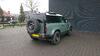
In this thread I am seeking out some advice for what to bring off-roading in a Defender. Firstly, let me explain what I’ve got:
In this thread I am seeking out some advice for what to bring off-roading in a Defender. Firstly, let me explain what I’ve got:
- 20” w/ GY AT tires
- Front tow hoop exposed, two rear tow hoops
- TJM tow hitch receiver shackle
- Two different tow ropes, one of which can be knotted easily around the factory tow hoops
- Two (extremely cheap) recovery boards
- Factory jack
Rock Crawling
Joined: Jan 2023
Posts: 304
Likes: 141
From: Southwest
That it is. However, Garmin's Android apps kill Android Auto outright (showstopper for me, offroad maps are usually on the center console), so I ended up using Zoleo instead. More useful as a communicator (together with a phone, not standalone), but it is bigger, heavier and less hiker friendly than inReach.

Thread
Thread Starter
Forum
Replies
Last Post