


Fuel Leak When Filling


Thread Starter
|
Drifting
Joined: Jul 2009
Posts: 38
Likes: 0
From: Bressler, PA
 Fuel Leak When Filling
I have only fueled my Discovery once (been working on it ever since  ), but when I tried to top it off, it leaked gas out of what seemed like the middle of the truck. I took the access panel off, and notice that the hose shown in the diagram below wasn't connected. (The one that goes to the fuel pump assembly)
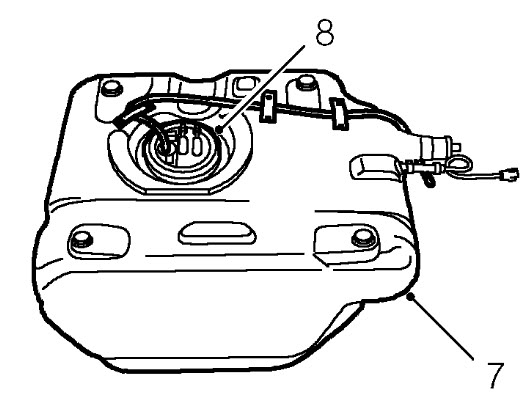
Is this the vent hose? I thought I read that it was a 3/4" hose. The hose in question does go up to the filler neck area though.
Just wanted to see if I was chasing my first problem, or if that hose being off could have been another problem I didn't know about.
), but when I tried to top it off, it leaked gas out of what seemed like the middle of the truck. I took the access panel off, and notice that the hose shown in the diagram below wasn't connected. (The one that goes to the fuel pump assembly)Is this the vent hose? I thought I read that it was a 3/4" hose. The hose in question does go up to the filler neck area though.
Just wanted to see if I was chasing my first problem, or if that hose being off could have been another problem I didn't know about.


Winching
Joined: Jul 2006
Posts: 739
Likes: 5
From: west of chicago
There's (2) vent hoses, one on the filler neck, 3/4"
and that little 1/4" that goes on the fuel pump nipple.
When you top off the tank, it's above the nipple, hence, leaks out to depressed ring around fuel pump, I imagine.
luck,greg
and that little 1/4" that goes on the fuel pump nipple.
When you top off the tank, it's above the nipple, hence, leaks out to depressed ring around fuel pump, I imagine.
luck,greg


All fuel tanks have a vent tube, there is also one on the filler neck.
There is the filler neck and then a smaller tube that runs parallel to the filler neck to let air vent when filling the tank.
There is also a small hose that runs to the engine compartment from the gas tank and then back again to let pressure vent when the car is parked.
it vents into a canister usually known as the carbon canister, it collects all the gas vapors and returns them as liquid back to the gas tank.
it is a closed system and if there is a leak it will set a fault code. (EVAP leak)
In the old days before non vented gas caps all the vapors went into the atmosphere.
There is the filler neck and then a smaller tube that runs parallel to the filler neck to let air vent when filling the tank.
There is also a small hose that runs to the engine compartment from the gas tank and then back again to let pressure vent when the car is parked.
it vents into a canister usually known as the carbon canister, it collects all the gas vapors and returns them as liquid back to the gas tank.
it is a closed system and if there is a leak it will set a fault code. (EVAP leak)
In the old days before non vented gas caps all the vapors went into the atmosphere.

Thread
Thread Starter
Forum
Replies
Last Post
