


4.6/hp24 into 4.0/hp22


Thread Starter
|
Camel Trophy
Joined: Nov 2012
Posts: 3,717
Likes: 248
From: Longview, Texas

The number 8 piston was in fact hitting the crank journal. I got the bolts off and found this. What a crappy day.
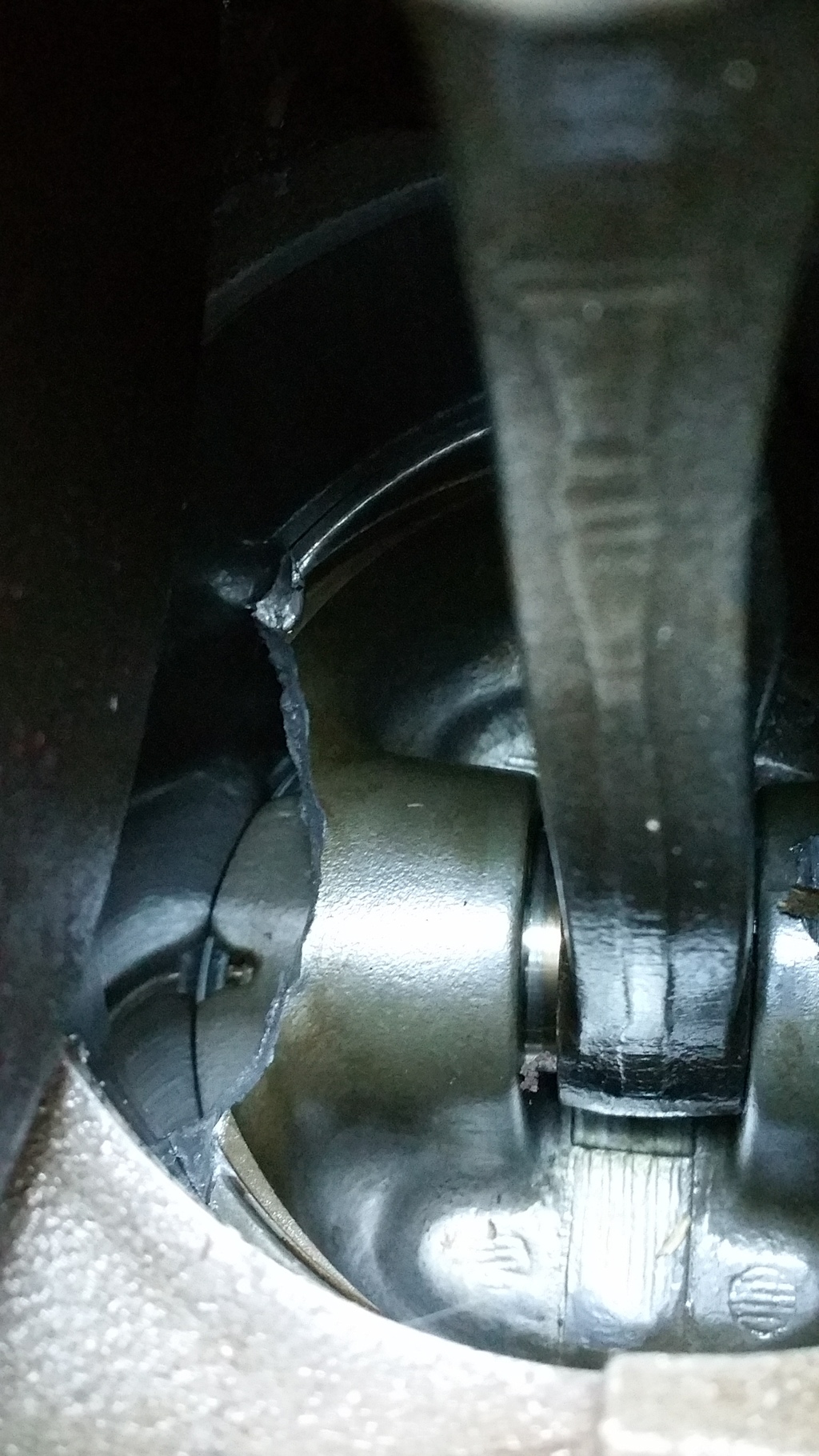
The odd thing is there was no metal in the pan and I have turned the engine over several times and nothing has fallen out.. Obviously, the piston didn't look like that when I put it in.
I'll do what a shop would do and replace the piston. Hope for the best. The crank and bearings look fine.
The odd thing is there was no metal in the pan and I have turned the engine over several times and nothing has fallen out.. Obviously, the piston didn't look like that when I put it in.
I'll do what a shop would do and replace the piston. Hope for the best. The crank and bearings look fine.
Last edited by Charlie_V; Jan 30, 2016 at 03:50 PM.
Thread Starter
|
Camel Trophy
Joined: Nov 2012
Posts: 3,717
Likes: 248
From: Longview, Texas
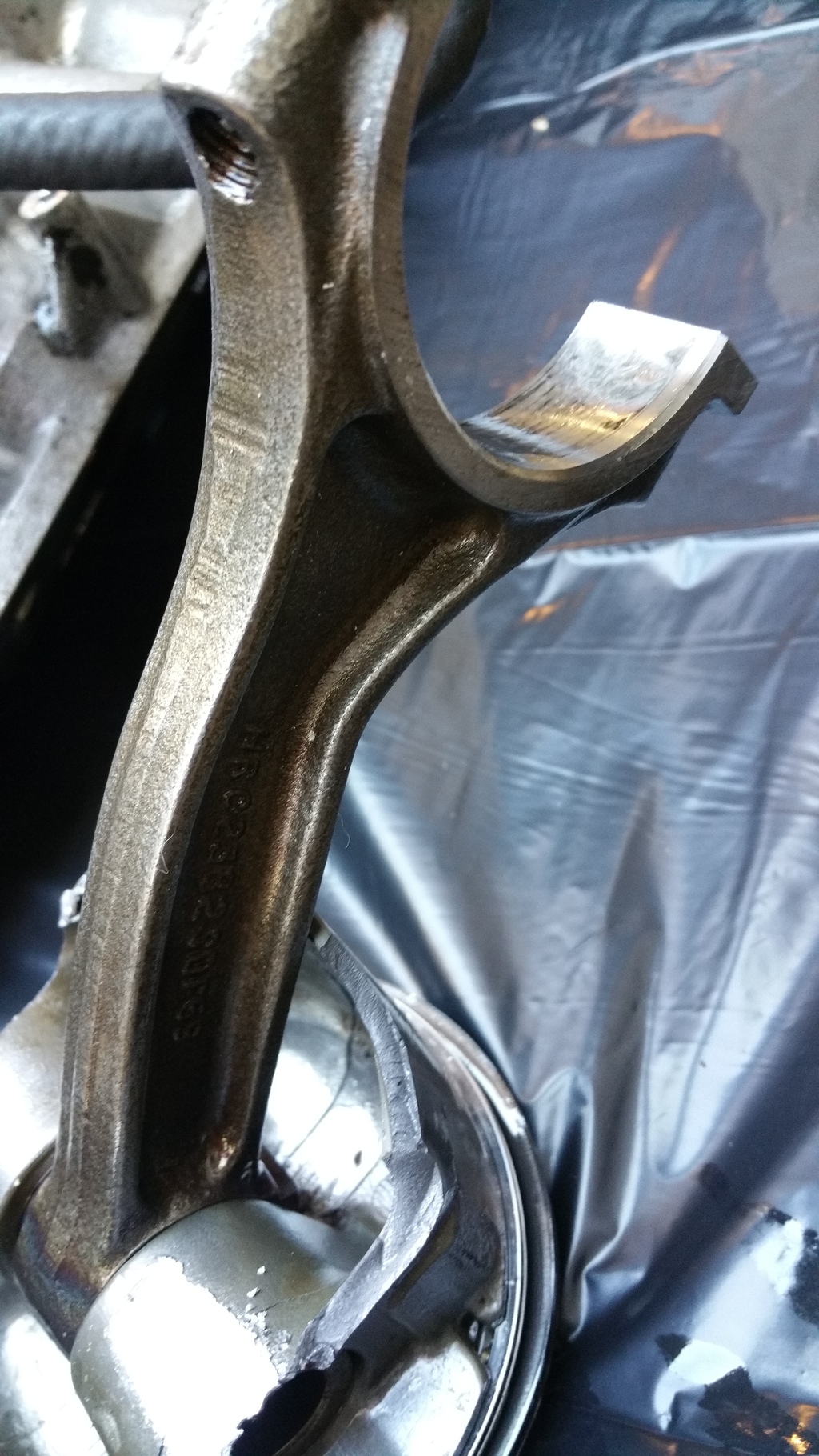
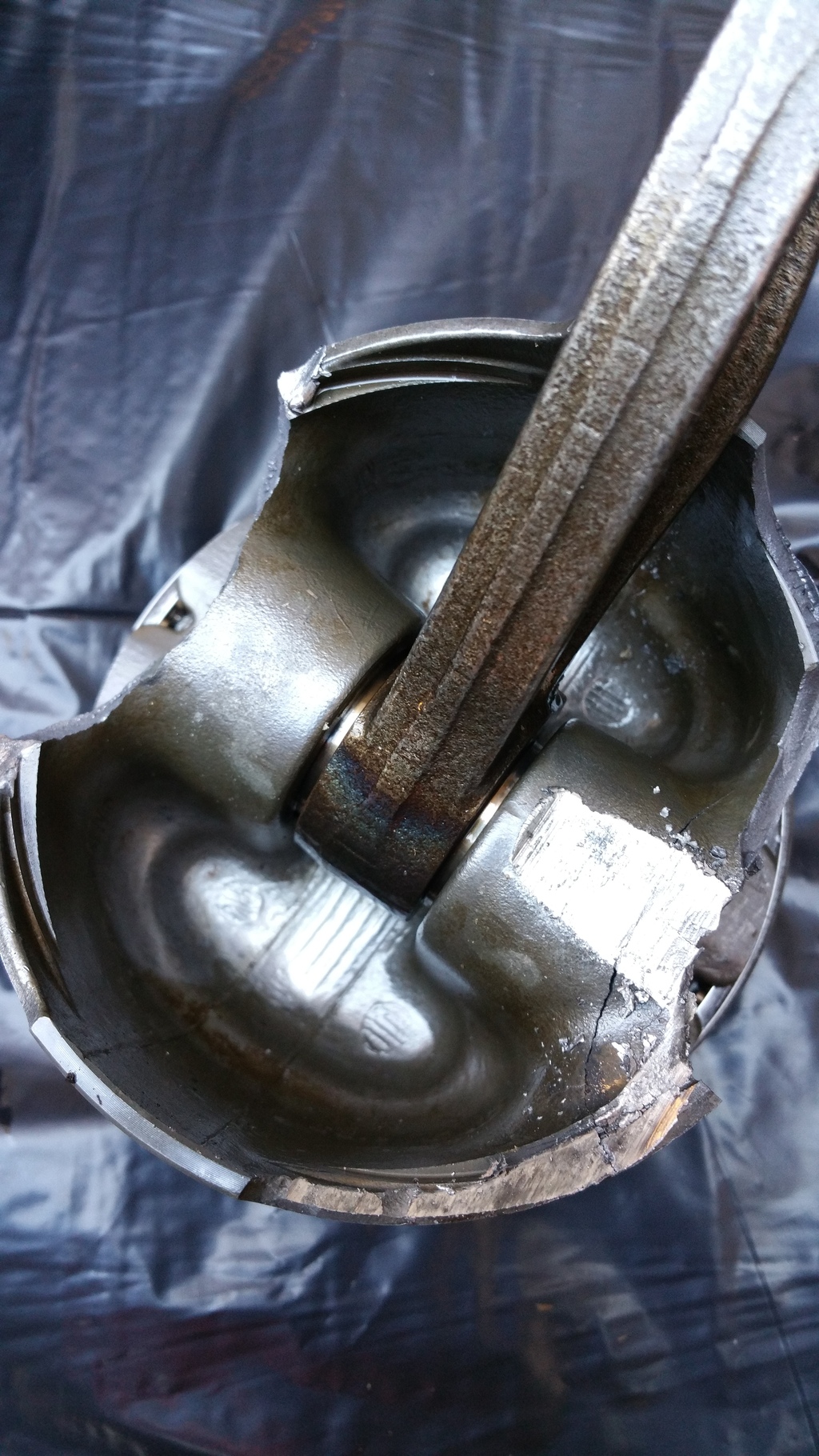
I'm taking the passenger head off now to get the piston out and I've ordered a replacement piston and rings. Surely that chunk is going to show up. Haha. I mean, it is HUGE.

Thread Starter
|
Camel Trophy
Joined: Nov 2012
Posts: 3,717
Likes: 248
From: Longview, Texas
I may have bent the rod worse trying to turn the crank after removing the engine on advice of a mechanic. The piston surely seized. I added oil top and bottom, let it soak, and tried turning it. After I stopped the engine I tried to start it, which immediately smoked the starter. That's when I decided to pull the engine. The starter may have bent the rod or it may have already been bent from gas in the cylinder or friction on the piston. And I may have made it worse trying to turn the crank after I took the engine out. So, error one was the bad injector. I don't feel bad about that because the injectors came from my own working engine literally one day before. It washed the cylinder and filled it with gas. The piston seized. Error two may have been having the rod in backwards. It was in the right position when I took it out today but I may have rotated it during the removal... I'll never know but some Googling shows similar damage from both bent and reversed rods.
I've continued to disassemble it and thankfully the crank and cam look fine. I'm replacing that piston and rod, the bearings (all of them), the rings on that piston, and the head gaskets and bolts. I'm also replacing the oil pump on the chance that any metal got past the screen. Then fire it up and see what happens. But only after turning it at least four revolutions to make sure nothing is hitting.
Getting all of the little metal bits out is a concern. A mechanic said to use copious brake cleaner.
Off to order parts. Deja vu all over again.
I've continued to disassemble it and thankfully the crank and cam look fine. I'm replacing that piston and rod, the bearings (all of them), the rings on that piston, and the head gaskets and bolts. I'm also replacing the oil pump on the chance that any metal got past the screen. Then fire it up and see what happens. But only after turning it at least four revolutions to make sure nothing is hitting.
Getting all of the little metal bits out is a concern. A mechanic said to use copious brake cleaner.
Off to order parts. Deja vu all over again.
Last edited by Charlie_V; Jan 30, 2016 at 04:07 PM.
Thread Starter
|
Camel Trophy
Joined: Nov 2012
Posts: 3,717
Likes: 248
From: Longview, Texas
Swap pistons?
Just a thought that fits the original theme of this thread better than most of my posts...
After I originally assembled this engine I read about using 4.0 pistons in the 4.6 for greater compression. I've just done a Google search and read some threads about it the 4.0 pistons hare the same size as 4.6 pistons in each dimension, but the have a smaller bowl on the face of the piston (I know. I always use the wrong terms. Doing my best.) and therefore produce greater compression. I have two 4.0 engines, one of which has been a parts go to for the 4.6 a.d working 4.0. So I have 4.0 pistons at the ready. I think if I switched to higher compression pistons I might want to use studs instead of stretch bolts for the heads.
Alex in particular, but to anyone in general... do you have any informed opinions on running the 4.0 pistons? Obviously I can't use the longer 4.0 rods but I wasn't planning to. Swapping the pistons would be easy since I already have it open.
After I originally assembled this engine I read about using 4.0 pistons in the 4.6 for greater compression. I've just done a Google search and read some threads about it the 4.0 pistons hare the same size as 4.6 pistons in each dimension, but the have a smaller bowl on the face of the piston (I know. I always use the wrong terms. Doing my best.) and therefore produce greater compression. I have two 4.0 engines, one of which has been a parts go to for the 4.6 a.d working 4.0. So I have 4.0 pistons at the ready. I think if I switched to higher compression pistons I might want to use studs instead of stretch bolts for the heads.
Alex in particular, but to anyone in general... do you have any informed opinions on running the 4.0 pistons? Obviously I can't use the longer 4.0 rods but I wasn't planning to. Swapping the pistons would be easy since I already have it open.
Last edited by Charlie_V; Jan 31, 2016 at 05:06 PM.

Camel Trophy
Joined: Aug 2014
Posts: 4,743
Likes: 985
From: Southwestern Virginia
I say go for it! If the only difference is bowl size that is, and not any difference in piston height. I would try it for ****s and giggles if it were me. If it works then that would be awesome. The only issue I could see would be if it actually increased compression TOO much. Stock is 12:1 which is pretty high, but I've heard of guys running as much as 15:1 on 93 octane and the computer should automatically retard the timing some if it causes any issues. Definitely use studs. If worse comes to worse, you buy a couple sets of head gaskets and double stack them to bring compression back down, coating them both with shellac to prevent leaks. That's an old trick from the early days of home brew turbo engines. Really though, I don't think it will cause any issues. I say go for it and come back to report results.
Thread Starter
|
Camel Trophy
Joined: Nov 2012
Posts: 3,717
Likes: 248
From: Longview, Texas
I say go for it! If the only difference is bowl size that is, and not any difference in piston height. I would try it for ****s and giggles if it were me. If it works then that would be awesome. The only issue I could see would be if it actually increased compression TOO much. Stock is 12:1 which is pretty high, but I've heard of guys running as much as 15:1 on 93 octane and the computer should automatically retard the timing some if it causes any issues. Definitely use studs. If worse comes to worse, you buy a couple sets of head gaskets and double stack them to bring compression back down, coating them both with shellac to prevent leaks. That's an old trick from the early days of home brew turbo engines. Really though, I don't think it will cause any issues. I say go for it and come back to report results.
Anyway, it gives me something to do while I wait for parts.