


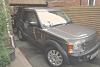
That jeep bumper is the tits.


Rock Crawling
Joined: Apr 2008
Posts: 417
Likes: 41

Crush cans are to alleviate damage to the truck they are attached to. They are not designed to protect other vehicles. If someone runs a light and you t-bone them at speed, the resulting carnage would appear the same with or without crush cans. The crush part of the factory can is only about six inches, which will not scrub off much momentum from two and half vehicle at speed.
Rock Crawling
Joined: Apr 2015
Posts: 256
Likes: 51
From: Belfast, N. Ireland
True they are only effective at low speed up to about 30mph, but if you add the rigidity of a very solid piece of heavy metal even that small give is gone especially where pedestrians are concerned.

Recovery Vehicle
Joined: Sep 2014
Posts: 1,195
Likes: 110
From: Putnam county. NY.
Any "give" in an accident is worthwhile. Even a few inches.
It increases the time the human body takes to change direction, which means less G forces it feels, which protects the squishy bits from damage.
Although it's probably less friendly for a pedestrian to be hit by a lifted truck, as they won't go over the top. But bounce off forwards. Bigger change of direction in a shorter time, more squishy bit damage.
It increases the time the human body takes to change direction, which means less G forces it feels, which protects the squishy bits from damage.
Although it's probably less friendly for a pedestrian to be hit by a lifted truck, as they won't go over the top. But bounce off forwards. Bigger change of direction in a shorter time, more squishy bit damage.

Baja
Joined: Sep 2007
Posts: 5,232
Likes: 52
From: Georgia, USA
Again, the bumper crush cans, according to the NHTSA rules that require shock absorbing bumpers, are to lessen damage to your own vehicle in <30mph crashes. To prevent front end lighting and radiator damage, so that your vehicle will still be drivable.
They have nothing to do with preventing damage to other vehicles. They have nothing to do with lessening g-forces on occupants and they certainly have nothing to do with protecting pedestrians.
Until you have to replace/work on something that requires removal of the bumper.
A static lift is very different than dynamic stresses. That's why you don't use a tow rope for dynamic recovery, same principle.
They have nothing to do with preventing damage to other vehicles. They have nothing to do with lessening g-forces on occupants and they certainly have nothing to do with protecting pedestrians.
A static lift is very different than dynamic stresses. That's why you don't use a tow rope for dynamic recovery, same principle.

Thread Starter
|
Recovery Vehicle
Joined: May 2008
Posts: 811
Likes: 78
From: Howell, NJ
Again, the bumper crush cans, according to the NHTSA rules that require shock absorbing bumpers, are to lessen damage to your own vehicle in <30mph crashes. To prevent front end lighting and radiator damage, so that your vehicle will still be drivable.
They have nothing to do with preventing damage to other vehicles. They have nothing to do with lessening g-forces on occupants and they certainly have nothing to do with protecting pedestrians.
Until you have to replace/work on something that requires removal of the bumper.
A static lift is very different than dynamic stresses. That's why you don't use a tow rope for dynamic recovery, same principle.
They have nothing to do with preventing damage to other vehicles. They have nothing to do with lessening g-forces on occupants and they certainly have nothing to do with protecting pedestrians.
Until you have to replace/work on something that requires removal of the bumper.
A static lift is very different than dynamic stresses. That's why you don't use a tow rope for dynamic recovery, same principle.
Can you elaborate on whatever static vs. dynamic recovery means? Dynamic stresses?


Drifting
Joined: Feb 2014
Posts: 31
Likes: 1
From: Kirkland Wa
Lets take a step back, not saying this is the correct way. How many 4x4 trucks with welded up bumpers are bolt on? How many use crush cans.... almost none.
Does it mean they serve a purpose, absolutely.
Will they help in a crash, sure, is everything designed for a crash?
Do they always serve a practical purpose?
I think this application will be just fine....
Does it mean they serve a purpose, absolutely.
Will they help in a crash, sure, is everything designed for a crash?
Do they always serve a practical purpose?
I think this application will be just fine....
Baja
Joined: Sep 2007
Posts: 5,232
Likes: 52
From: Georgia, USA

Camel Trophy
Joined: Nov 2009
Posts: 4,079
Likes: 227
From: IL
Wow. If you don't know the difference between static and dynamic recovery then maybe you shouldn't be welding bumpers on? I wouldn't recover someone with a setup like that. Just not worth my life when welds break and metal goes flying.
The bumper itself is fine, the installation is terrible. My friend has the same bumper on his D1(ArmyRover has a pic of it somewhere). He actually made proper mounts for the bumper so it will bolt onto the frame. He also welded on side trim pieces to make it look good.
At least you list your place of employment so people know where NOT to go.
The bumper itself is fine, the installation is terrible. My friend has the same bumper on his D1(ArmyRover has a pic of it somewhere). He actually made proper mounts for the bumper so it will bolt onto the frame. He also welded on side trim pieces to make it look good.
At least you list your place of employment so people know where NOT to go.
Thread Starter
|
Recovery Vehicle
Joined: May 2008
Posts: 811
Likes: 78
From: Howell, NJ
1 10 MM bolt is a bit over 6k LBS shear. so ur buddy has 24000Lbs shear strength. The weld itself is over 12k lbs per sq. inch. I don't know exactly how many square inches of bead I got on it, but I guarantee its stronger on paper. The other problem is the shear strength of the paper thin frame rail. No one knows when those bolt holes will pull through. On my truck I know for sure the welds are stronger than the frame rail. If anything it will just rip 2 pieces of the frame off.