


End All answer to stupid oil questions.


Thread Starter
|
Recovery Vehicle
Joined: May 2008
Posts: 811
Likes: 78
From: Howell, NJ

I decided to give a WIX engineer a call this morning.
He made the very good point that with the higher bypass valve setting at cold startup or when clogged your bearings are going to be starved for oil longer than with the 8-11 valve setting specified by Rover.
The higher valve setting will cause a greater pressure differential for a longer period of time, so less oil going to where you need it.
Certainly nothing wrong with a larger filter, but I suggest sticking with the factory bypass setting.
He made the very good point that with the higher bypass valve setting at cold startup or when clogged your bearings are going to be starved for oil longer than with the 8-11 valve setting specified by Rover.
The higher valve setting will cause a greater pressure differential for a longer period of time, so less oil going to where you need it.
Certainly nothing wrong with a larger filter, but I suggest sticking with the factory bypass setting.

Baja
Joined: Sep 2007
Posts: 5,232
Likes: 52
From: Georgia, USA
The surface are of the media isn't going to change how easily it is to push cold oil through the it.
Even the short stock filter is not going to clog if you change your oil as you should. The bigger risk is at cold start up and the risk level is going to depend on the ambient temp, oil viscosity and type of oil.
Sure, you could run some tests, but you would have to test a lot of variables and I just don't see enough, if any, advantage to higher PSI bypass setting to make it worth it.
Filters like this aren't new and I think if there was an advantage to a high bypass PSI, Rover would have specified one.
Personally, I can't use the filter as it won't clear my steering damper, but if I were to use one this size I'd choose the lower psi version.
Even the short stock filter is not going to clog if you change your oil as you should. The bigger risk is at cold start up and the risk level is going to depend on the ambient temp, oil viscosity and type of oil.
Sure, you could run some tests, but you would have to test a lot of variables and I just don't see enough, if any, advantage to higher PSI bypass setting to make it worth it.
Filters like this aren't new and I think if there was an advantage to a high bypass PSI, Rover would have specified one.
Personally, I can't use the filter as it won't clear my steering damper, but if I were to use one this size I'd choose the lower psi version.
Baja
Joined: Sep 2007
Posts: 5,232
Likes: 52
From: Georgia, USA
Training
People may be interested in the online training videos from Hastings.
Online Training | Lube
They can be a bit dry, but keep in mind that Hastings and Wix's primary customers are fleet users.
Online Training | Lube
They can be a bit dry, but keep in mind that Hastings and Wix's primary customers are fleet users.

Super Moderator
Joined: Jan 2011
Posts: 16,322
Likes: 88
From: Savannah Georgia
I contacted Purolator in Fayetteville NC. I first got the "claims lab", they actually process and research claims issues related to filters. Who knew? They sent me to the filter hot line, 800-526-4250. There I found that the MANN W950/7 is the Purolator L40107.
When I asked for the layman's explanation, it was pretty much what WIX told Tom, on a cold start, with thick oil, the pressure differential forces the bypass valve open, oil flows around the filter, and when it warms up the filter begins to process all of the oil flow. The main reason for this is to bypass a clogged filter. Each factory specs the bypass range they want (bet that has something to do with the claims lab also). So with the 35 PSI bypass, on a cold start it would try to shove cold oil through the filter media over a wider range than the 10 PSI rated filter. How much oil flow would depend on oil viscosity, temperature, etc.
So the cold start performance is probably a wash when compared to a smaller filter with less media. Next time I'll buy the L40107, even though I have not noticed any change in cold crank up with 5W40 Rotella. No oil gauge here (yet).
When I asked for the layman's explanation, it was pretty much what WIX told Tom, on a cold start, with thick oil, the pressure differential forces the bypass valve open, oil flows around the filter, and when it warms up the filter begins to process all of the oil flow. The main reason for this is to bypass a clogged filter. Each factory specs the bypass range they want (bet that has something to do with the claims lab also). So with the 35 PSI bypass, on a cold start it would try to shove cold oil through the filter media over a wider range than the 10 PSI rated filter. How much oil flow would depend on oil viscosity, temperature, etc.
So the cold start performance is probably a wash when compared to a smaller filter with less media. Next time I'll buy the L40107, even though I have not noticed any change in cold crank up with 5W40 Rotella. No oil gauge here (yet).
Thread Starter
|
Recovery Vehicle
Joined: May 2008
Posts: 811
Likes: 78
From: Howell, NJ
The surface are of the media isn't going to change how easily it is to push cold oil through the it.
Even the short stock filter is not going to clog if you change your oil as you should. The bigger risk is at cold start up and the risk level is going to depend on the ambient temp, oil viscosity and type of oil.
Sure, you could run some tests, but you would have to test a lot of variables and I just don't see enough, if any, advantage to higher PSI bypass setting to make it worth it.
Filters like this aren't new and I think if there was an advantage to a high bypass PSI, Rover would have specified one.
Personally, I can't use the filter as it won't clear my steering damper, but if I were to use one this size I'd choose the lower psi version.
Even the short stock filter is not going to clog if you change your oil as you should. The bigger risk is at cold start up and the risk level is going to depend on the ambient temp, oil viscosity and type of oil.
Sure, you could run some tests, but you would have to test a lot of variables and I just don't see enough, if any, advantage to higher PSI bypass setting to make it worth it.
Filters like this aren't new and I think if there was an advantage to a high bypass PSI, Rover would have specified one.
Personally, I can't use the filter as it won't clear my steering damper, but if I were to use one this size I'd choose the lower psi version.
A larger surface area decreases the speed at which the oil has to pass through it, thereby lowering pressure drop through the filter at any oil temperature. (this is evident in my pressure tests with just changing the filter from purolator to mann, and seeing the oil pressure at the galley increase. (yes the old filter MAY have been dirty thereby increasing pressure drop, but with only 400 miles on the old filter the pressure difference could be at best within the margin of gauge reading error))
What I'm saying is the pressure drop may never exceed 10 PSI, (under any normal circumstance, cept' clogging solid ofc) rendering any bypass valve useless.
But your completely right about the bypass at 10 PSI, I also see no benefit for the valve to open above 10 PSI, unless you really want to make sure every drop of oil getting pumped is filtered.

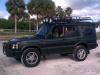
Ok.... I figure this is the perfect thread for my question. I recently purchased an 04 Disco, series II, seriously pampered. This truck has 111k on the clock and was a 1 owner truck, with the owner using Mobil 1 synthetic every 7000 mikes since day 1. This motor does have a tick, but I've read they all do.... Kinda let's you know she's running, and it does tend to come and go. My question is should I continue the Mobil 1, or switch oils and why? Thank you in advance for all your infinite wisdom, fellow Rover lovers.
Switch to the Shell Rotella 15w-40, change it every 5,000 miles.
Why?
Because Mobil 1 is overpriced crap and I bet your tick goes away after you make the switch.
You will be happy with the switch, your engine will be happier and your wallet will be too.
Why?
Because Mobil 1 is overpriced crap and I bet your tick goes away after you make the switch.
You will be happy with the switch, your engine will be happier and your wallet will be too.

TReK
Joined: Nov 2009
Posts: 2,433
Likes: 5
From: Woodway, WA
This is the single greatest piece of advice I've gotten from this forum. I run the full syn Mobil 1 in our Mazda 3 2.5L and it's great....but the Rover HATES it.
------
And now, back to your regularly scheduled oil filter debate
------
And now, back to your regularly scheduled oil filter debate

