


Chasing the multiple misfires


Pro Wrench
Joined: Apr 2021
Posts: 1,411
Likes: 397
From: SE Washington State

Reluctor ring is on front side of flywheel (yes, mixed up flex plate terminology). Thanks for the photo. Where the CKP sensor stinger fits between the pins. Not easy to access, maybe peek up in there via inspection plate, or mirror through the CKP sensor hole. If the CKP is a Hall Effect sensor, signal quality can degrade at low speed, so potentially an issue, even though a long shot. This is where a high quality sensor can make a difference (e.g. NGK), and make sure it is installed with the correct spacer for correct insertion depth.
My understanding is a miss causes a slight change in rotational speed, that is detected by the CKP sensor (vs knock sensors), but maybe there is more to the internal ECM logic as Ahab mentions.
My understanding is a miss causes a slight change in rotational speed, that is detected by the CKP sensor (vs knock sensors), but maybe there is more to the internal ECM logic as Ahab mentions.

Thread Starter
|
Winching
Joined: Aug 2012
Posts: 645
Likes: 258
From: San Mateo, CA
Reluctor ring is on front side of flywheel (yes, mixed up flex plate terminology). Thanks for the photo. Where the CKP sensor stinger fits between the pins. Not easy to access, maybe peek up in there via inspection plate, or mirror through the CKP sensor hole. If the CKP is a Hall Effect sensor, signal quality can degrade at low speed, so potentially an issue, even though a long shot. This is where a high quality sensor can make a difference (e.g. NGK), and make sure it is installed with the correct spacer for correct insertion depth.
My understanding is a miss causes a slight change in rotational speed, that is detected by the CKP sensor (vs knock sensors), but maybe there is more to the internal ECM logic as Ahab mentions.
My understanding is a miss causes a slight change in rotational speed, that is detected by the CKP sensor (vs knock sensors), but maybe there is more to the internal ECM logic as Ahab mentions.


Last edited by Tony Luna; Mar 25, 2025 at 06:58 PM.

The maf can make the engine sing lots of weird codes, not sure why but it does. No #6 is a clue, as is the fact it only does it hot. 98% chance it is ignition related. Coils still behind the engine ? Compresion/kocking is not a thing at idle with these engines at reasonable compression ratios and you can't get unreasonable without spending a lot of money. The 02's and fuel trims tell us it is not lean.
When I get these non-obvious problems I start by swapping known good with questionable components till we find the bad component. Given the obvious has been swapped (albeit new instead of known good, bringing in some room for error). The other weird thing these do is occasionally have a bad ECU. I have had two. Always good to have a spare set, if that seems excessive get a set off ebay and resell it when you are done testing.
When I get these non-obvious problems I start by swapping known good with questionable components till we find the bad component. Given the obvious has been swapped (albeit new instead of known good, bringing in some room for error). The other weird thing these do is occasionally have a bad ECU. I have had two. Always good to have a spare set, if that seems excessive get a set off ebay and resell it when you are done testing.
Pro Wrench
Joined: Apr 2021
Posts: 1,411
Likes: 397
From: SE Washington State
CKP sensor spacers are different for manual vs automatic transmissions, according to interweb, manual are nearly 1/2 inch skinnier than autos. Older Rovers used skinny shims to adjust for a tiny 1 mm or 1.5 mm gap (between stinger and flywheel). Super hard to measure there, so they must have felt it just touch then back out one shim.
The sensor mounting disc (that fits to the block) is removeable on D1s, not sure about D2s. Maybe check the mountings are all seated completely in the new block, and right down the middle? We're talking tiny dimensions here, right on the borderline. Also some sensors signal quality will degrade more than others at low speed, even within a batch, and be effected more by dimensional mounting differences. So might make a difference with a different sensor. Did you reset adaptive values of the ECM? Have you measured alternator voltage at idle? Low voltage can cause weird codes too.
If all this stuff doesn't resolve the misfires, seems to me could still be the lope. That could be tested by installing a milder cam.... Not sure you really want to go there.
The sensor mounting disc (that fits to the block) is removeable on D1s, not sure about D2s. Maybe check the mountings are all seated completely in the new block, and right down the middle? We're talking tiny dimensions here, right on the borderline. Also some sensors signal quality will degrade more than others at low speed, even within a batch, and be effected more by dimensional mounting differences. So might make a difference with a different sensor. Did you reset adaptive values of the ECM? Have you measured alternator voltage at idle? Low voltage can cause weird codes too.
If all this stuff doesn't resolve the misfires, seems to me could still be the lope. That could be tested by installing a milder cam.... Not sure you really want to go there.
Last edited by JohnZo; Mar 26, 2025 at 12:54 AM. Reason: Low voltage
Thread Starter
|
Winching
Joined: Aug 2012
Posts: 645
Likes: 258
From: San Mateo, CA
The maf can make the engine sing lots of weird codes, not sure why but it does. No #6 is a clue, as is the fact it only does it hot. 98% chance it is ignition related. Coils still behind the engine ? Compresion/kocking is not a thing at idle with these engines at reasonable compression ratios and you can't get unreasonable without spending a lot of money. The 02's and fuel trims tell us it is not lean.
When I get these non-obvious problems I start by swapping known good with questionable components till we find the bad component. Given the obvious has been swapped (albeit new instead of known good, bringing in some room for error). The other weird thing these do is occasionally have a bad ECU. I have had two. Always good to have a spare set, if that seems excessive get a set off ebay and resell it when you are done testing.
When I get these non-obvious problems I start by swapping known good with questionable components till we find the bad component. Given the obvious has been swapped (albeit new instead of known good, bringing in some room for error). The other weird thing these do is occasionally have a bad ECU. I have had two. Always good to have a spare set, if that seems excessive get a set off ebay and resell it when you are done testing.
I don't have known good components - except for maybe a CrankPS that was in the truck for about 6 years before the first build.
The builder is sending me a loaner ECU to try.
For now, I added a bottle of octane boost to see if it makes any difference. Suspect I'll have to get down to 1/2 or 3/4 of a tank before seeing any possible effect from this. I have a few more bottles to keep going if results are favorable.
Thanks for all the help.
Last edited by Tony Luna; Mar 26, 2025 at 09:09 AM.
Thread Starter
|
Winching
Joined: Aug 2012
Posts: 645
Likes: 258
From: San Mateo, CA
CKP sensor spacers are different for manual vs automatic transmissions, according to interweb, manual are nearly 1/2 inch skinnier than autos. Older Rovers used skinny shims to adjust for a tiny 1 mm or 1.5 mm gap (between stinger and flywheel). Super hard to measure there, so they must have felt it just touch then back out one shim.
The sensor mounting disc (that fits to the block) is removeable on D1s, not sure about D2s. Maybe check the mountings are all seated completely in the new block, and right down the middle? We're talking tiny dimensions here, right on the borderline. Also some sensors signal quality will degrade more than others at low speed, even within a batch, and be effected more by dimensional mounting differences. So might make a difference with a different sensor. Did you reset adaptive values of the ECM? Have you measured alternator voltage at idle? Low voltage can cause weird codes too.
If all this stuff doesn't resolve the misfires, seems to me could still be the lope. That could be tested by installing a milder cam.... Not sure you really want to go there.
The sensor mounting disc (that fits to the block) is removeable on D1s, not sure about D2s. Maybe check the mountings are all seated completely in the new block, and right down the middle? We're talking tiny dimensions here, right on the borderline. Also some sensors signal quality will degrade more than others at low speed, even within a batch, and be effected more by dimensional mounting differences. So might make a difference with a different sensor. Did you reset adaptive values of the ECM? Have you measured alternator voltage at idle? Low voltage can cause weird codes too.
If all this stuff doesn't resolve the misfires, seems to me could still be the lope. That could be tested by installing a milder cam.... Not sure you really want to go there.
I'll insert my spinning head emoji here...
In all seriousness, THANK YOU all for sharing your knowledge, advice, and time on this. I'm not going to give up as I am WAY beyond the point of no return on this rig and all common sense when it comes to this money pit flew out the window some time ago.
I'll have to do some research to figure out optimal CPK probe depth/positioning. May even put a new one in while I'm at it. In the meantime, I'll see if the octane boost makes any difference - never too late for Occam's razor to kick in...
How do I reset the adaptive values of the ECM?
Alternator voltage is over 14V. New battery too.
If it ends up being the cam, I'll live with it.
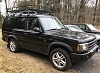
Not bad for 299K. Under hood/carriage and interior look better than exterior.

Last edited by Tony Luna; Mar 26, 2025 at 10:52 AM.

Thread Starter
|
Winching
Joined: Aug 2012
Posts: 645
Likes: 258
From: San Mateo, CA
I'll keep the Nanocom idea simmering.

